

All Activity
- Past hour
-

Fan art project - need help with book details
HeavyHalfMoonBlade replied to ShockExit's topic in Introduce Yourself
Welcome to Dragonmount, ShockExit 🙂 I hope that everything is going well with your knee There should somewhere be a list of characters per chapter so you could home in on their descriptions but I have failed to find one. I did see some stuff on reddit when I was searching but did not quite feel up to that site at the moment. Perhaps someone with the ducks more in a row than me will be able to point you to a suitable resource. The artwork is amazing 🤎And total props for including the real star of the books, Bela 🙂 - Today
-
 HeroOfTheCorn joined the community
 - Last week
-
 Irish Lucky joined the community
 -
 I kinda get what you’re hinting at. Not sure I’d call it “real enlightenment,” but Wheel of Time definitely has those moments where everything—themes, cycles, characters, philosophy—clicks together in a deeper way. I think a lot of people feel it, but don’t really talk about it because it’s hard to put into words without overexplaining or sounding vague 😅 You’re probably not alone, just one of the few trying to describe that feeling.
 -
 kesavanr joined the community
 -
Ya no doubt was wondering to myself when I first started seeing that crap flare up again if you and your family were around effected areas? That's gotta be stressful AF. Funny story about 5 or 6 months ago my oldest asked me If I ever finished watching Buffy made me chuckle lololololol
-
A lot of fireworks. As per usual the last couple of years....
-

Could Egwene's overall arc be the most tragic thing ever?
DojoToad replied to Dedicated's topic in Wheel of Time Books
Exactly! -
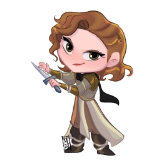
Hello all! Last year, I finally finished WoT after 20+ years of not really reading books at all. I stopped reading after Crossroads of Twilight when it was first released (life and all), but I rediscovered the books thanks to the TV show and Rosamund Pike's audiobook versions. I finished up with Kramer and Reading and finally got the end of the story! Audiobooks were ideal for me, since I've been recovering from knee surgeries and could listen while doing physio exercises. I've got more surgeries ahead of me and still can't walk properly, so Wheel of Time has become my comfy obsession and distraction. After finishing the books, I decided to try my hand at painting character portraits based on the details given in the texts. Jordan's descriptions are so rich and clear in some passages, and I didn't often see a lot of fan art depicting outfits Jordan described. Where characters have an iconic look (ie Mat and his hat, or Galad in a whitecloak uniform), I'll do them in those. I do the basic portrait, and then later turn it into a graphic with variations if needed (ie, I wanted to give Morgase a Queen Elizabeth frill despite it not being in the books, but couldn't work in the Andorran stole with it, so she has an alt version with no frill where she wears her stole.) So, I started a long term project/distraction to plug away at this year. But! I'm probably going to need help locating descriptions in the books where I can't remember them, or if I forget details. My next subject is Gawyn, and I'm planning to paint him in the outfit he's described as wearing in TDR, Chapter 16, Hunters Three, which is basically a dark green coat and white shirt, so nothing too complicated, but I was wondering if there are any other passages describing his clothing. I know in EotW, he's written as wearing red, white, and gold clothing, a coat and cloak that are brocaded and embroidered, but I've already done Rand and Morgase in red and don't want more red lol. If anyone has any suggestions of where I can look in the text for descriptions of what Gawyn wears, I'd be eternally grateful! You can see the images I've already done on my tumblr, and read my rambling there about my artistic choices for each. I've just finished Elayne in her EoTW outfit and have already done Galad, Rand, Berelain, Morgase, Bela, and Thom. Thank you all!
-
 ShockExit joined the community
 -
 karanmthw joined the community
 -
DM News:Book Review: The River Has Roots
marktuan replied to James Thomson's topic in General Discussion
Really enjoyed your write-up, James. That line about “untamed grammar” stuck with me too, it’s such a unique way to frame magic. I had a similar reaction to the book overall: it’s short, but it lingers. The relationship between the sisters felt very grounded, which made the more surreal/fae elements hit harder for me. And Rin’s shifting nature was both beautiful and a little unsettling in a good way. Also agree on not saying too much about the plot. It’s definitely one of those stories that works best going in a bit blind. Curious if you felt the same about the ending? It left me thinking about it longer than I expected for something you can read in one sitting. -
marktuan joined the community
-
If anything I'm self aware...and annoying...lol How's NynGOAT?!?!?! Hope all's well?
-
Self reflection. Interesting.
-
 Kora Studio joined the community
 -
Lololololol I'm always LOCK CLEAR!!!!! Hi ITHIGOAT hope all's well!!!! Tell your Wolfy AF hubby I says hi! Lololololol
-
It's not hijacking if it's about their special mad skills bro! But yeah... get to know us first and then we can tap into your talents maybe. So... come join the orgs?
-
Nope, but I remembered a bit of it and asked Copilot on a whim if it could help me recreate it. It said yes and gave me a whole lot of gobbledygook, which I saved for when I have time to try it. Maybe start with a simple roller-dice thing. Sorry for hijacking your thread, @androlf
-
 Sobha World City joined the community
 -
 rakesh joined the community
 -
.
-
Yeah, I wrote it up after getting involved on wotwiki and now just copy and edit as necessary for new places.
-

Hi everyone, I made a WoT wordle like puzzle game!
androlf replied to ringerrings's topic in Introduce Yourself
Aside from the corrections we've been discussing in PMs, I have some suggestions for the game itself: Don't make the character name green when it's an incorrect choice. On several questions I've made an incorrect guess that matched all the criteria; their name showed up green. You're probably already planning on doing this, but expand the "share" results button to include an emoji representation of the player's guess, like wordle and wheeldle do. Maybe also add https:// in front of fantasdl.com so it becomes a link in e.g. Reddit, Discord, or Facebook. I would recommend treating New Spring as being between books 10 and 11 (its published order). If you ask any given WoT fan which book Lan first appears in, they're going to say TEOTW way more often than NS. That said, as a programmer I recognize that it's probably a lot simpler to just treat it as book 0. It'd be nice to be able to see one's own history, but obviously that has the potential to cost a lot of storage. Other comments: The ability to go back and play previous days is awesome. Really knocked it out of the park starting on a 1st of the month that was also a Sunday, lol. Really nice interface. I really like that the number of the question is included in the share text. -
Welcome, Andrew 🙂 That was an incredibly detailed intro post 🙂 sounds like you will fit right in here. Look forward to seeing you about.
-
Lock Clear
-
They all came... and then they mostly all went away. But I'm playing DnD now and it's a lot less paranoia inducing
-
Ooh Elgee... did you save the Code? That would be amazing if you did. I tried Tina but she didn't have a copy and TMD just never got back to me.
-
Hi everyone, I made a WoT wordle like puzzle game!
Elgee replied to ringerrings's topic in Introduce Yourself
I definitely need to check this out as soon as I get a chance! -
The Silence - a Limited DnD campaign by Ithi
Ithillian Turambar replied to Ithillian Turambar's topic in Community Games
We got ourselves a Rhea! -
Working on making a new one. Once financial year-end is done. Welcome to Dragonmount, @androlf! That was a massively impressive intro post 🙂
-
uh I didn't delete it if people want to play but I'd be more than happy to defer to another host You'd have to ping me on discord to get my attention with less than a month delay in response time though lol
-
The Silence - a Limited DnD campaign by Ithi
Ithillian Turambar replied to Ithillian Turambar's topic in Community Games
And Thom is playing! He's a 20 year veteran and has so many books on DnD beyond. He's sure to bring some fun energy to the game. Cos these veteran players be loco 1 or 2 spots left -
The Silence - a Limited DnD campaign by Ithi
Ithillian Turambar replied to Ithillian Turambar's topic in Community Games
You are in! Thanks for playing Thom





-
Stay Connected








-
-
-
Support Dragonmount Get exclusive content on our Patreon. Don't miss out.
-
News items
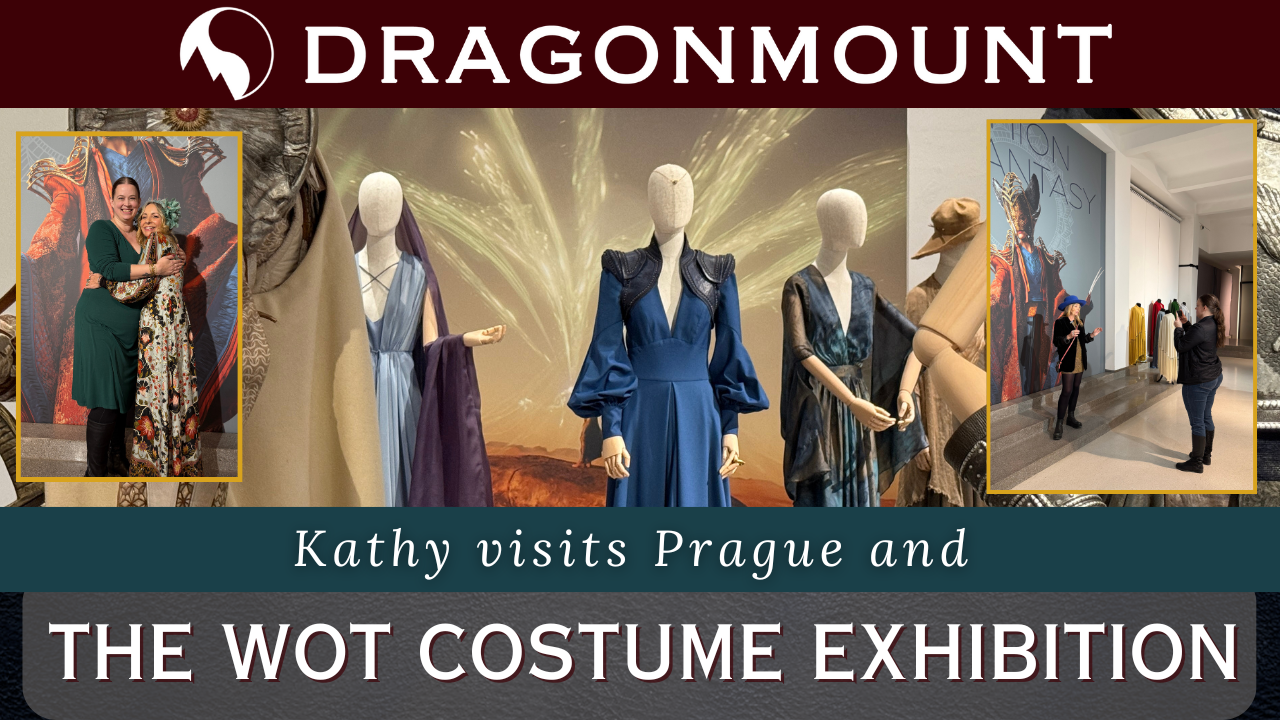 Fashion & Fantasy: The Wheel of Time Costume Exhibition
The Wheel of Time costume exhibition at Prague's Galerie Manes showcases over 80 breathtaking costumes, offering an unprecedented look at the intricate craftsmanship behind the show.
Read More... -
Other Recent News
-