

News items
What’s it like to have the dream job of finding the coolest
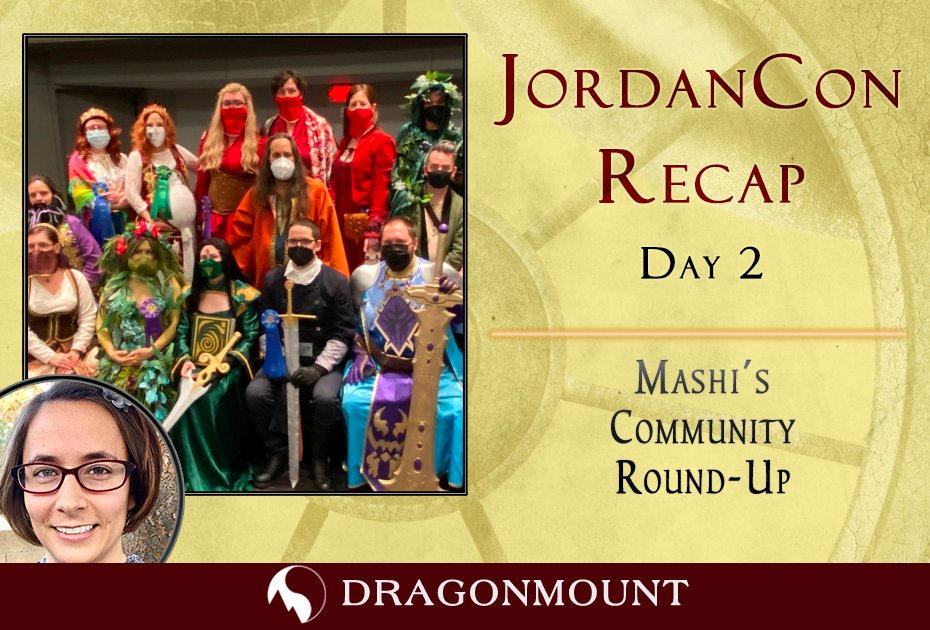

JodanCon Day 2 is the best! It’s the only full day (unless you count CouchCon after the closing ceremonies) and that means it’s packed from morning to evening. The annual costume contest falls on Saturday, so the cosplayers were out in droves. Wheel of Time cosplays are expected. https://twitter.com/AielMelindhra Brandon Sanderson and cosmere are expected. And at JordanCon, other fandom tie-ins are also expected. https://www.facebook.com/42bananas?__tn__=-UC*F Nothing is off limits for this fandom! Keep that in mind for next year. If you're hesitating over a costume idea, don't. And speaking of the costume contest, here are the highlights. Judges' Choice: Judge Leslie: Jessica Jones as Pregnant Elayne Judge Redfield Designs (Kathryn Paterwic): Ruth Carnejo as Egwene at the Last Battle Judge Deana: Ris Harp as Blackbeard (from Our Flag Means Death) Found Object: tWoTCast and Taffy Bennington as The Best Hedge Rand and Mat Slept Under Workmanship Award: April Davis as a Nym Winners: Novice: Liz Willoughby as Bright and Fun Tinker Journeyman: Chris Orndorff as Steampunk Ursula Master: Seth Lockhart, Kate Helmly, Stephen Helmly, and Steph Greear as Heralds (from Rhythm of War) Best in Show: Marcos Romero, Sita Romero, Theo Romero, and Brandee Anderson as Logain Ablar, Liandrin Sedai, and Red Aes Sedai https://twitter.com/LeisaSedai Justin Gerard—one half of this year's Artist Guest of Honor—had a live drawing panel. The end result was an amazing Trolloc. Dragonmount's own Rand al'Thor made an appearance. Check out TikTok for all the videos. Another Rand variant also put on a display. Paul Bielaczyc reenacted the (in)famous cover of Lord of Chaos. I spent my time today talking about detectives in urban fantasy and attempting to crochet a Doomslug—well, technically a friend of Doomslug. One amazing thing about this convention is there is something for everyone. Tomorrow, I am teaching a Wheel of Time cross-stitching class in the Makers Track. I can’t wait to show pictures from that! Sunday’s coming on fast, but there’s still plenty of JordanCon left to indulge in. Follow along to see me and other Dragonmount staff on Facebook, Instagram, and Twitter. Which costume contest participant was your favorite? Let us know in the comments below.
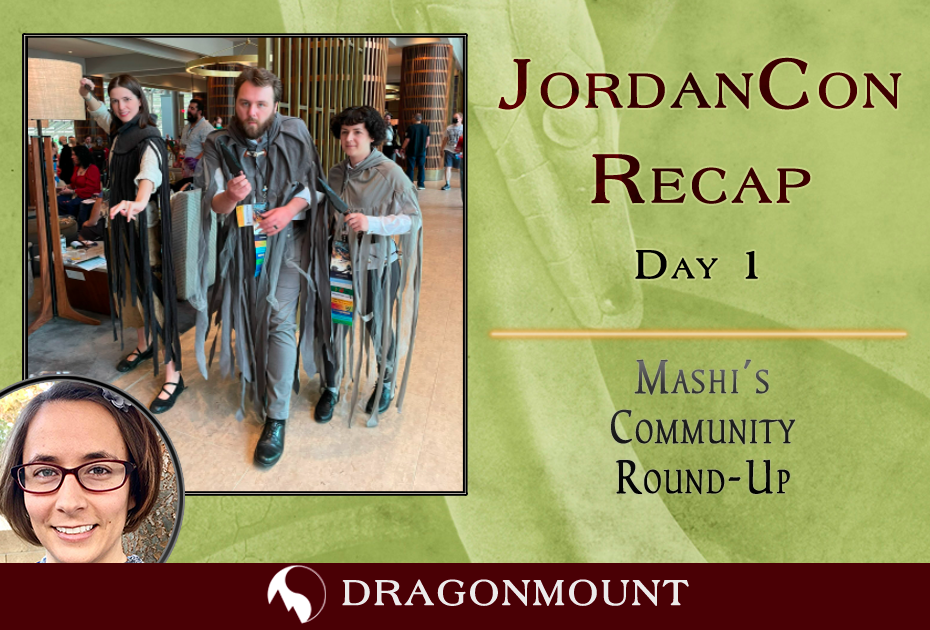
JordanCon 2022 kicked off today in Atlanta, Georgia. Despite a smaller, in-person gathering last summer, this feels like returning home after a long hiatus for many of us. Reuniting with friends and family I haven’t seen since 2019 was an amazing experience. So many familiar faces are here. And, so many new ones. Although this may be JordanCon’s biggest attendance so far, the quality of people is still on par for what we expect from this intimate convention. Today, I spoke to three random JordanCon first-timers and all of them were welcomed with open arms. It’s good to know that a large audience won’t break the spirit we strive for: a feeling of family. And while all JordanCon members feel like family, it’s also a great place to hang with literal family. Our own Kitty Rallo and her sister Aleena. My sister, Maggie, and I posing with our “not today, Shai’tan” shirts. Speaking of Kitty, keep an eye out for a Q&A with Maria Simons, from Team Jordan. It was a busy day for panels today. After opening ceremonies with Toastmaster Rhed, I was grateful to be on the “There are books?? (The Wheel of Time for Beginners)” panel. We got to talk to new readers and new JordanCon members and share non-spoiler aspects of the series we love. After that, I was a guest on the highly anticipated “A New Turning of the Wheel: Why Changes are Necessary in an Adaptation” panel. Since JordanCon goers are the best, all discussion aspects and questions were civil. Naturally I was busy and missed the huge cast announcement! If you missed it, check out the Ayoola Smart as Aviendha article or our own Ebony and daughter Aviendha discussing this breaking news! Tomorrow is a full day, so I’m looking forward to another adventure. Follow along to see me and other Dragonmount staff on Facebook, Instagram, and Twitter. Have you attending JordanCon before? Plan on coming next year? Are you here now? Let us know in the comments below!
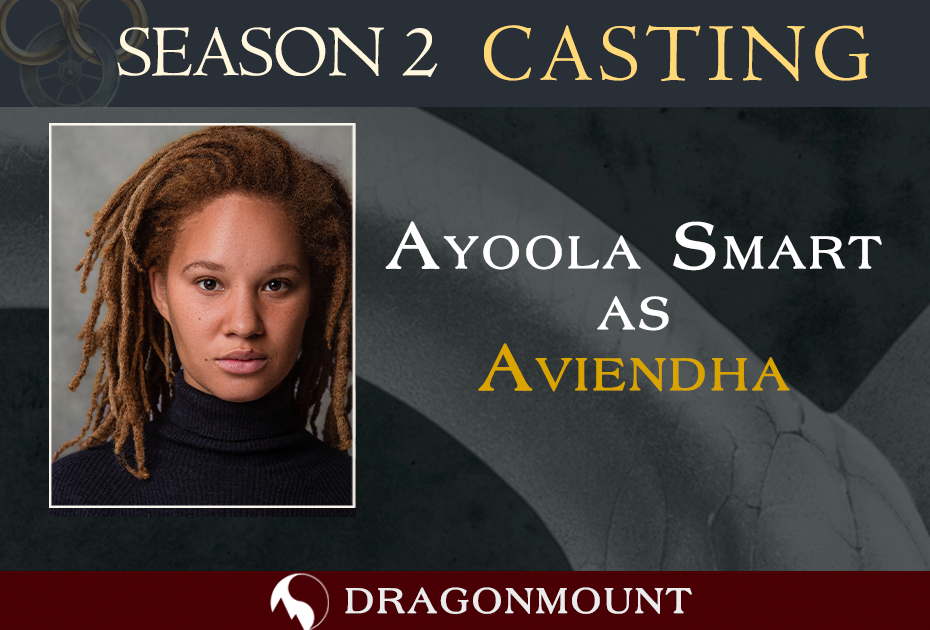

Rafe Judkins, the showrunner for Amazon Prime Video's Wheel of Time TV adaptation announced today during a pre-recorded video for JordanCon attendees that Ayoola Smart will play the role of Aviendha beginning in season 2. Here's our announcement video, given by our video host Ebony and her daughter Aviendha: Ayoola ("eye-oo-la") Smart is an Irish actress with extensive theater and TV credits for her young age. She's had notable roles in Killing Eve, Smother, and the BBC's adaptation of Les Misérables. You can view a showreel of some of Ayoola's work here. View the season 2 officially announced cast so far. What do you think of this casting announcement? Let us know in the comments or on our forums.
JordanCon is hosting an event where cast members from Amazon Prime Video’s Wheel of Time television show will answer fan questions. Here are the details from JordanCon’s Facebook page: Time is running out! Make sure to submit your questions as fast as possible.
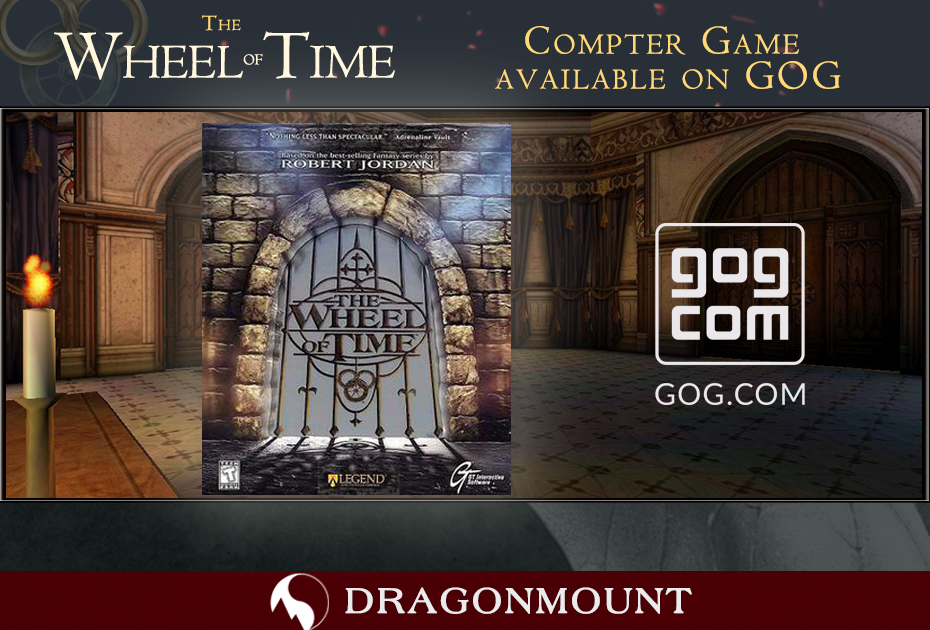
The Wheel of Time video game, originally published in 1999 by GT Interactive and developed by Legend Entertainment, is now available for purchase on GOG. GOG ("Good Ol' Games") is a website that publishes both classic and modern computer games. Older games like The Wheel of Time are made available to be played on modern computer systems. In this case, The Wheel of Time is available for Windows 7, 8, 10, and 11. Our blogger Adam Whitehead did a full retrospective review on The Wheel of Time game in 2019 for its 20-year anniversary. In addition, The Wheel of Time video game producer, Glen Dahlgren, who is also a fantasy novelist published a 20th-anniversary retrospective, an in-depth account of the making of the game, and the game's original design document.
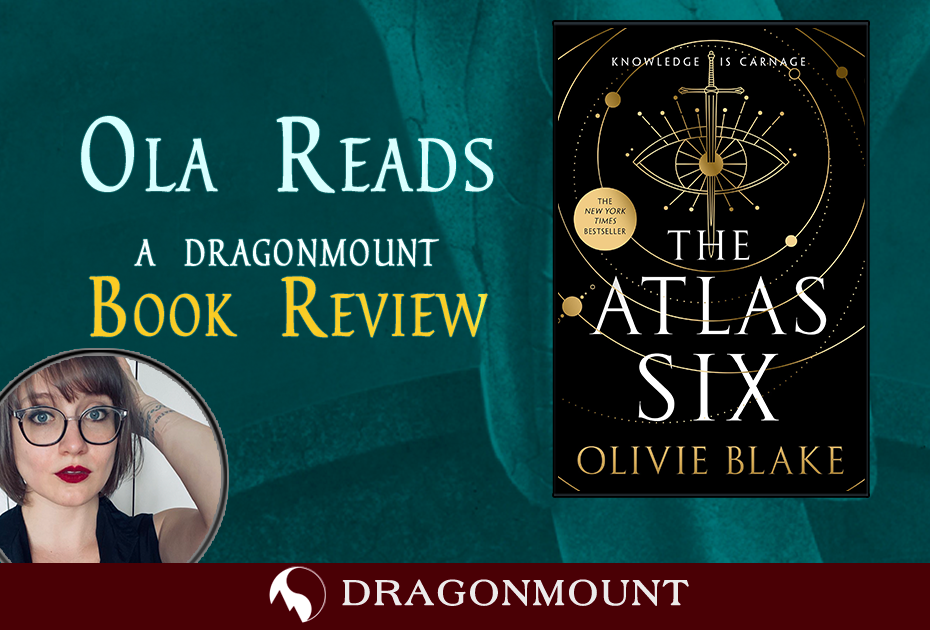

Aleksandra (Ola) Hill is a Polish-Canadian writer and the founder and editor-in-chief of khōréō, a magazine of speculative fiction by immigrant and diaspora writers. She won the grand prize in the 2019 Writer’s Digest Popular Fiction Awards and is currently pursuing an MFA in writing at The New School. You can find her on Twitter at @_aleksandrahill. # TL,DR: The Atlas Six by Olivie Blake is a fast-paced, high-tension magical mystery perfect for those who dream of having the knowledge of the world at their fingertips. The first in a series, it sets up a large, twisted world that will keep the reader guessing throughout. Especially recommended for fans of dark academia (such as The Secret History, Ace of Spades, or The Magicians) and authors like V. E. Schwab and Leigh Bardugo. # I came into The Atlas Six knowing too much about it, though I'd only read the publisher's blurb. Thus, my first recommendation to you is: if you haven't read The Atlas Six yet, put this review away and go read it now. Not the Goodreads summary; not the jacket copy; not this review. Just read the book. Still here? Need a little more? All right: in a version of our world where magic exists in the open, once a decade, six of the world's most talented magicians are selected for the chance to become members of the Alexandrian Society. Entrance to the Society will allow a magician to access knowledge beyond their wildest dreams—but they must make it through a year of study, first. Now, if you haven't read it yet, I beg you: go away. # The remainder of this review won't include spoilers, but will touch on aspects of the novel that may be better savoured while reading, so please tread carefully. The Atlas Six by Olivie Blake follows six of the world's most powerful, unique magicians: Libby Rhodes and Nico Ferrer de Varona, bitter rivals who can manipulate physical matter; Parisa Kamali, a telepath and seductress; Reina Mori, an historian with a difficult relationship with plants; Tristan Caine, an ambitious businessman with a penchant for seeing through illusions; and Callum Nova, a calculating trust fund baby who always gets what he wants. Each is recruited by a mysterious figure named Atlas, the Caretaker of the Alexandrian Society, which these six now have the chance to join. There's a catch, though: only five will become full members, and each candidate will have that year to prove they should be selected. The novel is an excellent blend of suspense, action, and drama. It uses the mystery of a secret society to its fullest potential; while the six initiates are able to access the library of the Alexandrian Society, for example, they are not able to access all of the books—their requests can be denied, and frequently are. That both the characters and reader have the sense of seeing just a sliver of the whole is incredibly enticing and also serves the book well as a set-up to a series. The magic system is also exquisite, in that it is unknowable without being unbelievable. Each magician—the most powerful of whom are called medeians—has a specialty, which can range across fields from physical (manipulating fire) to mental (telepathy) and, presumably, anything in between. The vast landscape of the possible with magic means that the author can throw any number of twists at the reader effortlessly; Blake's talent lies in the fact that none of them feel like deus ex machina. None of the characters understand the true extent of magic's power or abilities, and so, even as they use their various skills and knowledge to help and hinder each other, they are constantly surprised by what they can do. The constant delight in learning what else is possible kept me reading, mostly in one sitting, so if you're going to pick up this book, I recommend clearing your calendar. Throughout, the author also challenge's the tropes of the genre in which she is writing. I find it easy to get swept away in stories like this one: it's too easy to imagine myself as a powerful magician selected for a secret society where I'll have the world's knowledge at my fingertips. So easy, in fact, that I don't think to question too much of what the Society does, and the answers that it provides on its history—that it was founded to preserve the knowledge of the Library at Alexandria before it was burned—is enough. Yet the author managed to pull me up short without ruining my immersion: early on, the reader learns of the existence of societies "not unlike" the Alexandrian (p. 107), some of which believe "that knowledge should not be carefully stored, but freely distributed" and "greatly misunderstood" the work that the Alexandrian Society does. Later, the initiates make a discovery but do not share it with a greater world based on Atlas' oft-repeated warning: "most forms of knowledge [are] better reserved until it [is] certain that such revelations [won't] be abused" (p. 118). My spidey senses were tingling: these are colonialist talking points so frequently repeated by the British Museum and its ilk. While we don't wrestle with this too much in The Atlas Six, I hope (and trust) that we'll get to it thoroughly later on. As quickly as I devoured the first half of the book, I found my interest waning later on—not because the book loses steam or control of its plot, but because the world grows vaster in a way that I had suspected it might, but hoped it wouldn’t. To be clear, that isn’t to say that the evolution is bad; it’s just that the risk posed by an opportunity of such vastness means that there will be a squillion plot possibilities, not a single one of which will make all the readers happy, but only one of which the author can choose and still write a cohesive story. I think I’m probably the one reader who was hoping for the story to go in a different way—and I'm still planning to keep reading the series and look forward to The Atlas Paradox's release in October 2022. There’s just too many questions that I want answered to not keep going. In summary, The Atlas Six is a fantastic, fast-paced read for fans of dark academia, libraries, and twisty-turny plots. I recommend it wholeheartedly and look forward to continuing the series. The Atlas Six is available in the Dragonmount eBook store. Find it here!
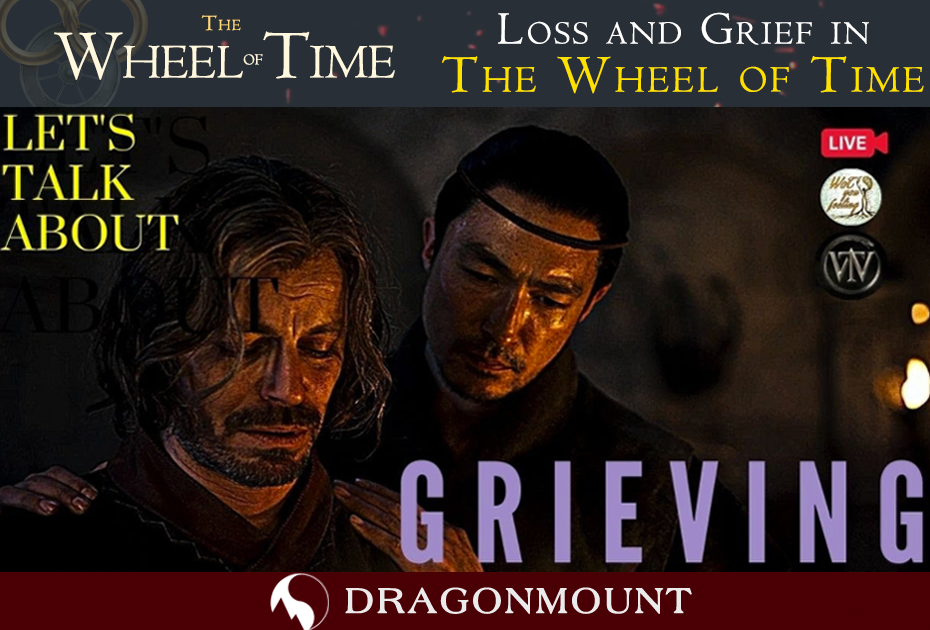
Jason Denzel joined a “WOT You Feeling?” panel on mental health focusing on the effects of loss and grief within The Wheel of Time series. The “WOT You Feeling,” made up of members Ryan, Miki, and Christine, delves into sensitive issues on mental health and how they relate to the world Robert Jordan created. You can follow them on Twitter, or see all their YouTube videos here. Identifying grief within the series is pretty easy. Jason points out that Robert Jordan considered the world dangerous and not an ideal place to live. Many of the characters experience grief throughout the series—Tam never loving another after the death of his wife, Kari, or even Lanfear holding on to the grief of a breakup over a thousand years ago. In fact, the Forsaken seem to be knee-deep in unprocessed trauma. On the other hand, Rand’s “Veins of Gold” moment shows a great moment of expressing and releasing those emotions. Jason also reflects on his own writing experiences and how mourning, or not mourning, plays a role in a character's story arc. You can watch the whole video below. This show was a fascinating look at the mental health issues our beloved characters face. Like what you see here? You can support “WOT You Feeling” and The Way of the Leaf on Patreon here!
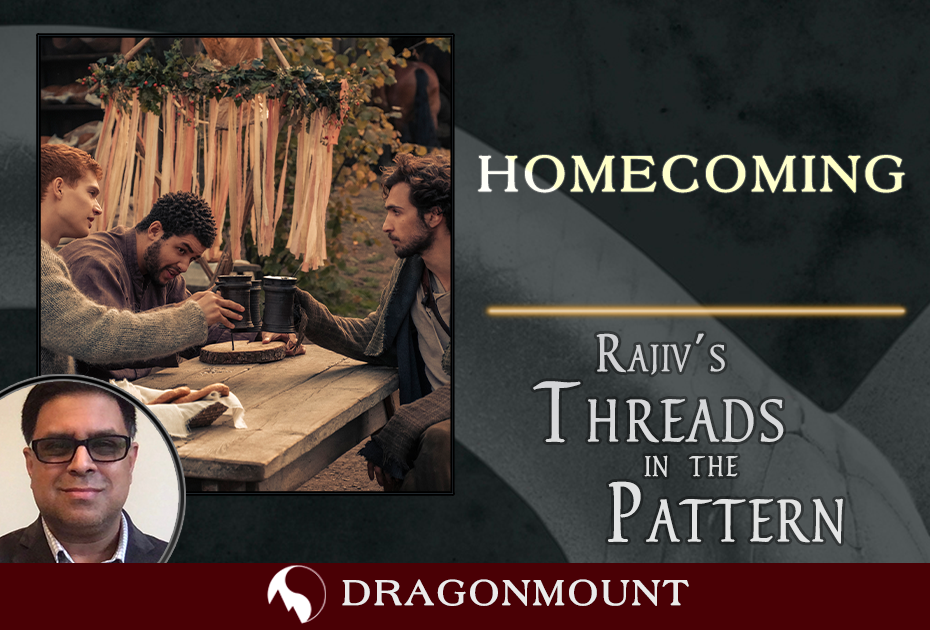

Rajiv Moté is Dragonmount’s book blogger with a lens on the craft of fiction writing. When he’s not directing software engineers, he writes fiction of his own, which can be found catalogued at his website. Early in the Covid-19 pandemic, the editor of The Magazine of Fantasy and Science Fiction C.C. Finlay noted that the stories submitted to his magazine had shifted away from the common themes of finding or returning home. He reasoned that writers were getting cabin fever, and the idea of “home” had lost its romance during the extended lockdown. (Finlay also noted that loneliness had become more of a thematic motivation in the stories he received, and more stories were culminating in a kiss.) It’s an interesting shift for fantasy fiction. For those of us whose introduction to epic fantasy was J.R.R. Tolkien, “home” has a powerful resonance in the genre. “There and back again” is almost a structural expectation for a story. In Tolkien’s world (and in Joseph Campbell’s Hero’s Journey), “home” is the beginning and end of the adventure. Preserving home forms the ultimate, most personal stakes, and the return illustrates how much the protagonists have grown. “The Scouring of the Shire” is perhaps the truest of the many endings of The Return of the King. It shows that, for the Hobbits, the War of the Ring was basically preparation for the battle for the once and future pastoral paradise of the Shire. When I read and reread The Wheel of Time, I often think of the New York Times blurb about the series. I like that quotation for the comparison, but I think it misses the mark. The Wheel of Time isn’t an extension of The Lord of the Rings, even a spiritual one, but it is certainly in conversation with it. Robert Jordan’s Emond’s Field was a pastoral paradise just like Tolkien’s Shire, but Jordan used it to say very different things about “home.” Where British Tolkien, writing in an era of waning empire, saw the War of the Ring (and the Scouring of the Shire) as a restoration of old glory and monarchical status quo, American Jordan, writing at the cusp of a new millennium, saw the end of the Third Age as a time of technological progress, cultural intermixing, and unpredictable change, for good and ill. In The Wheel of Time, you can never go home. Even in his pre-Wheel swords and sorcery novel, Warrior of the Altaii, Robert Jordan was interested in themes of a rapidly changing world, where people needed to adapt or go extinct. There is no going back to past glory, there is only going forward into something new. In The Eye of the World, Emond’s Field is portrayed as cozy and idyllic, and the young protagonists (except Egwene) leave it with reluctance. But where The Lord of the Rings was a story about going off to war to protect one’s home, The Wheel of Time is a bildungsroman, forging maturity and power from youth and innocence. “Home” is the nest that the fledglings must leave. Most make a place for themselves in the larger world. Of the Emond’s Field Five, only Perrin returns. His chapters, reminiscent of “The Scouring of the Shire,” are not about restoring home to its old status quo, it’s about transforming it into something suited to the times. After evicting the Whitecloaks and eradicating the Trollocs, Perrin musters the Two Rivers and leads them to war. The beard Perrin grows is the not-so-subtle symbol of him becoming a man. Egwene does briefly return home in the World of Dreams, looking for a place of safety, and even in that reflection of Emond’s Field she sees that it is changing. The Two Rivers is on its way to transforming from a forgotten district of Andor to a nation of its own, with banners, an army, a manor house, and a lord. For all the moral starkness in Robert Jordan’s cosmology, change is not a fork in the road, with one path leading into darkness, and the other into light. Change is chaos, everything moving at once, with three unintended consequences for every intended one. But as a world view, it means that there will always be new opportunities for growth and wonder. As a story, it means the tale is never over. There is always another adventure beyond the final page, something more to discover. On this, Jordan and Tolkien agree: the road goes ever on.
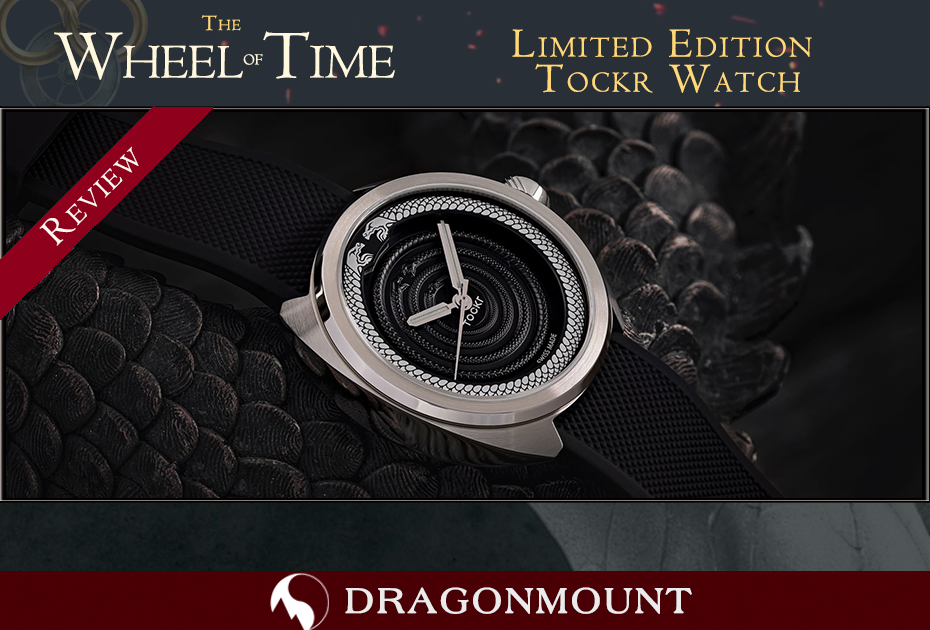

Dragonmount founder Jason Denzel recently got a hands-on look at the official, limited edition Wheel of Time watch from Tockr. Here's the full video: We'll be working closely with Tockr going forward, and perhaps giving you a chance to interact directly with the designers so that you can share your constructive feedback with them. After you view the video, let us know in the comments or on the forums what you think of the watch!
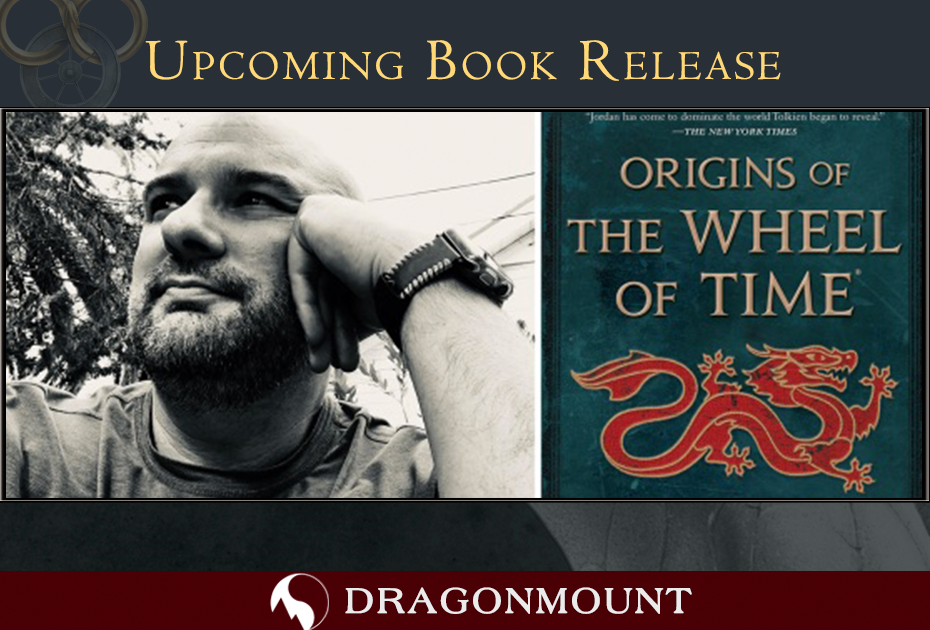
Tor Books announced today the forthcoming release of Origins of The Wheel of Time: The Legends and Mythologies that Inspired Robert Jordan by Michael Livingston. The book is scheduled for publication on November 8, 2022. Here's the book description: We'll provide early previews and a review, and possibly some give aways. Origins of The Wheel of Time is available for pre-order in ebook format from the Dragonmount store. You can also pre-order print and ebook copies from Barnes & Noble, Amazon, or your local independent bookseller.

Katy is a news contributor for Dragonmount. You can follow her as she shares her thoughts on The Wheel of Time TV Show on Instagram and Twitter @KatySedai The Wheel of Time Showrunner Rafe Judkins joined podcast host Helen O’Hara on The Empire Spoiler Special podcast this week. They discussed the first season, including clarifying some questions many book readers might have on some controversial choices. They also chatted a bit about season two and when and what we can expect. There’s been plenty of hopeful speculation about the timing of season two. Rafe said that it will be a while before we see it, and that there will be some time between Amazon’s new Lord of the Rings show and The Wheel of Time. Lord of the Rings will release on September 2nd 2022, which has some fans speculating we won’t see season two until early 2023. Rafe’s wording was vague enough that it’s hard to say when exactly we could see the second season. Rafe did mention that we can expect some cool content to tide us over in between the seasons, so keep an eye out for that! Rafe confirms that Aviendha is cast and that we will see more Aiel than expected in season two. Season two will also explore what happened to Moiraine whether she was stilled or shielded, Rafe has been avoiding saying either way outright. The second season will also include story lines from books two and three, with Mat following his book three journey. Rand’s adventures will include most story beats and characters from books two and three, but mixed together. It seems as we move into the second season fans can expect even more changes than in season one. This definitely doesn’t sound like a word for word adaptation. Most of the interview focused on season one including certain story lines about the Two Rivers five, how well Dónal Finn is taking over as Mat, that Nynaeve burning out/fake out death, more about Suian and Moiraine, and a bit about the Age of Legends scene. A couple points Rafe clarified: Emphasized again that this is the story of all five of our main characters, so some changes (Perrin’s wife, Mat’s backstory) are meant to set up the characters from the beginning. Mat especially needed more background. Amazon sent Rafe a 250 page document with survey data from book readers - those who finished the series, those who stopped mid-way, and those who started and didn’t make it very far. Every group agreed that Mat’s personality doesn’t really show up until book 3. Many book readers misread the Nynaeve burn out scene, so Rafe emphasized that death cannot be healed. He said that the misunderstanding is on them and not healing death will be made clearer in season two. Suian and Moiraine were using a ter’angreal to meet, but the exact metaphysics or location is still a bit of a mystery. Rafe said that they worked with Sarah Nakamura to ensure their private meeting place would work in-world. The oath scene between Suian and Moiraine were purposely meant to feel like marriage vows. And Rafe said that as a queer person he thought their relationship was explicit in the books. Helen and Rafe chatted about the reasoning behind not showing the fever dream early, was both to leave some mystery to draw in viewers, but also to explore what it means to be the Dragon Reborn. About Lews Therin and the Age of Legends - nothing was misspoken in that scene. Some fans have pointed out what they see as inconsistencies between the show and the books, but it sounds like we will have to watch and find out where they go! To listen to this excellent interview you’ll need to subscribe to the Empire Spoiler Special Film Podcast here. A subscription is £2.99 a month. What did you think of this interview? Anything surprising? Let us know in the comments and be sure to join the discussion on our forums. And be sure to check our TV section of the website.
Matt (@MalkiersKing on Twitter) debuts his video series, “WoT Were They Thinking?”: a respectful analysis of each episode of Amazon Prime Video’s Wheel of Time TV show. In this first episode, Matt is joined by Kristy Leigh Lussier from The Successful Screenwriter and Lauren from Unraveling the Pattern. Together, they examine Episode 1, Season 1 "Leavetaking" and discuss some of those controversial moments that fans are reacting to. Need more content? You can see Dragonmount's initial review of Episode 1 here, and don't forget the Podcast discussion here. All sorts of other tidbits can be found on Dragonmount's TV overview page here. Are you on board with the changes so far, or are you struggling against the current? Let us know in the comments below.