

News items
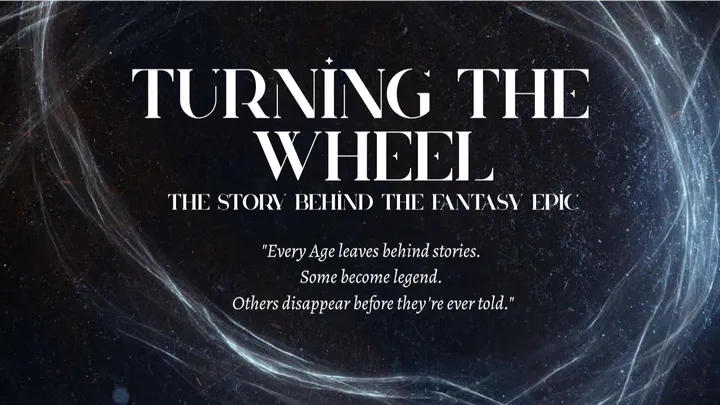
A Go Fund Me has launched to help fund a fan-made documentary on the creation of The Wheel of Time show, which hopes to include interviews with cast, crew, and fans alike.
"Turning the Wheel: The Story Behind the Fantasy Epic is an independent documentary series exploring the complete journey of Amazon's The Wheel of Time television series — from the earliest dreams of adaptation to the lasting legacy it leaves behind not just on television, but also on the community. "
Please donate towards the £5,000 goal here: https://gofund.me/59ecfea82
Read More...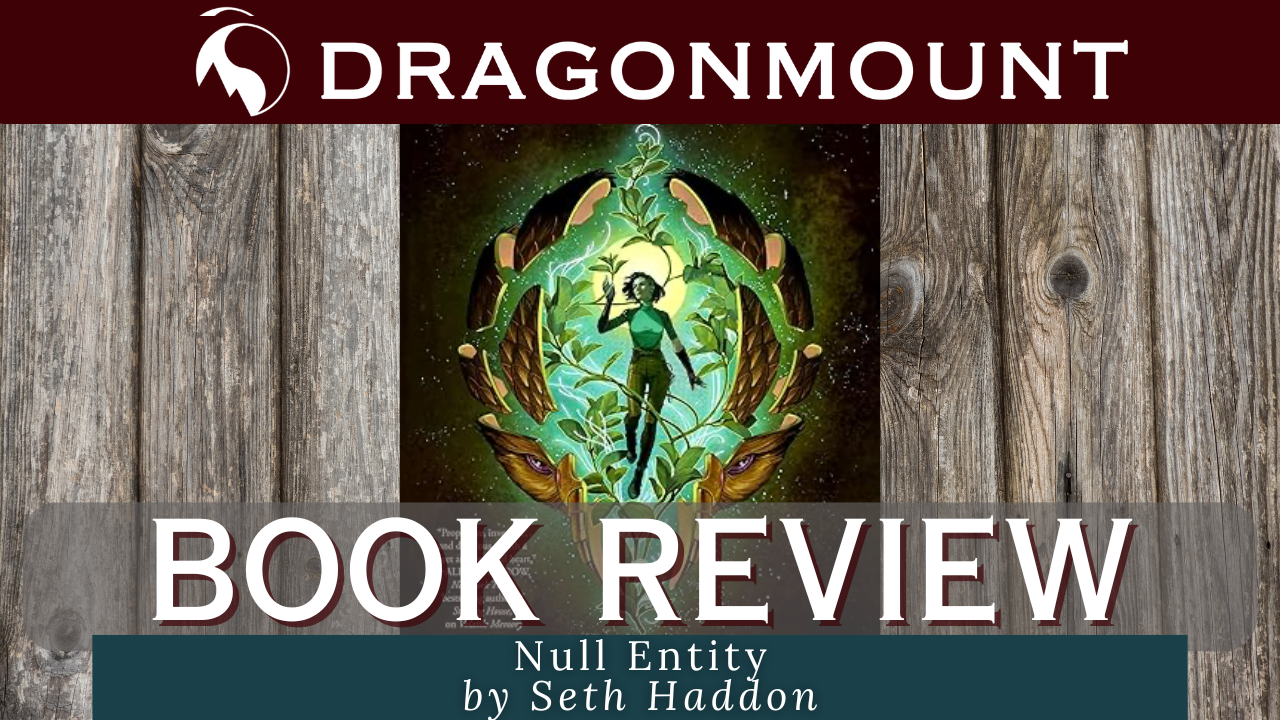

This is a similarly-sized sequel to Seth Haddon’s cyberpunk novella “Volatile Memory,” which I really enjoyed and reviewed last year. At the time, I did wish for more adventures with these characters, and apparently all my devices were listening to me. The first book tells the story of Wylla and Sable’s rather unconventional relationship. Notably, Sable has been murdered, but her consciousness survives in a prototype mask that Wylla finds on her dead body. Together they search for the killer, and are pursued by VisorForge, the corporation responsible for the mask tech. Along the way, the two of them fall in love. Ultimately, Wylla deletes all records of herself existing and is free to live completely off the grid. Several years later, Wylla wants out of the fight, but Sable still wants her revenge. Their actions in trying to expose VisorForge have attracted the attention of the Edenic Order, a group of radical eco warriors. They promise a way to take the corporations down for good, but can they themselves be trusted? Tensions rise between the couple as they are pulled in different directions, both metaphorically and literally. Things are still told in second-person perspective, with Sable narrating to Wylla, but you get used it to very quickly. The story does a lot of interesting things with gender and bodily autonomy, particularly with regards to Sable and Wylla’s experiences of their shared body. The scale of this book is significantly bigger than the first, upping the stakes and the action, and it proves to be a very satisfying end to their story. Very enjoyable! You can find both books in our ebook store!
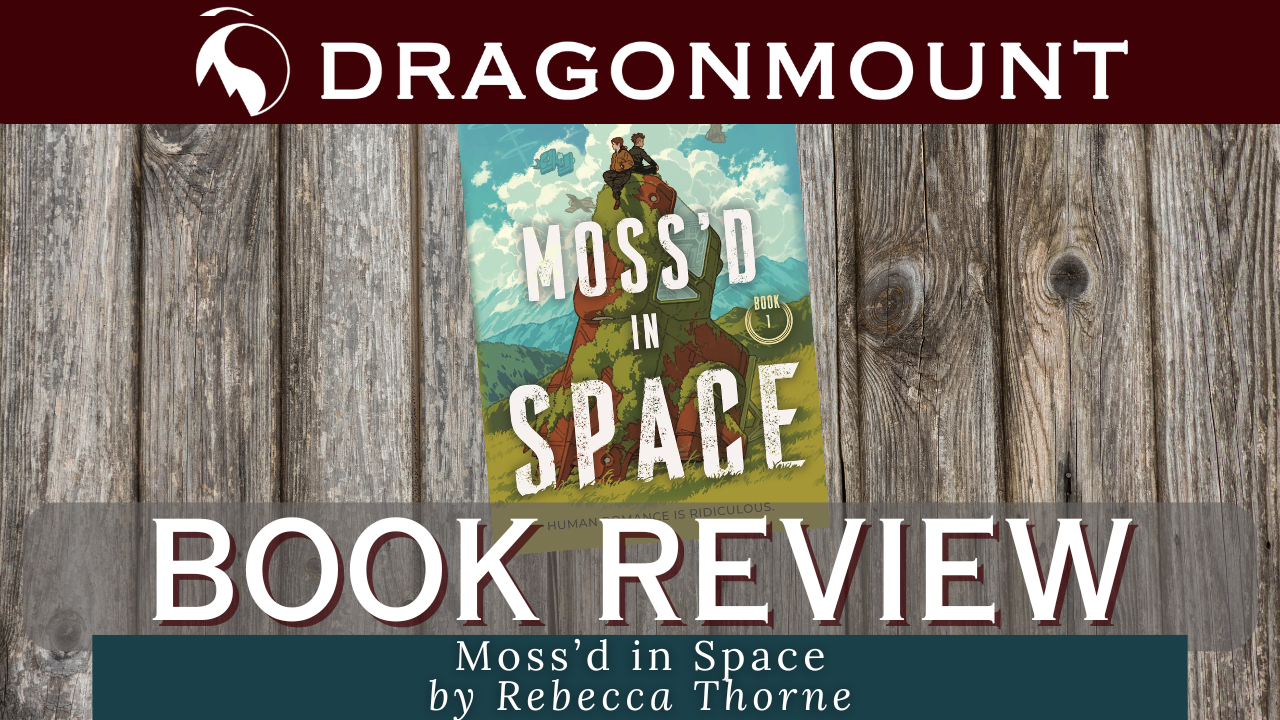
I am on record here as being a big fan of Rebecca Thorne’s work. Her cosy fantasy tetralogy, “Tomes & Tea”, is such a delightful romp, and her distinctly less cosy “Gilded Abyss” series is basically the fall of Rapture from Bioshock with a different kind of Big Daddy. What’s not to like? Not to mention all the puns that physically hurt. So, when I heard her next book was going to be a cosy sci-fi adventure mixing the whimsical tone of Becky Chambers’ “Wayfarers” series with a side order of Martha Wells’ snarky Murderbot—two of my all time favourites—the only logical conclusion was that she was writing this new book just for me, personally. Which is probably bad from an overall sales perspective, but I can’t deny I’m pleased with the result. Torian Razner, like many of the disenfranchised members of her society, lives on a decaying space station orbiting a quite pleasantly terraformed planet. Said planet would rather that those poor people stay far away, thank you very much. The ailing life support systems on the station are damaging her sister Celise’s lungs and Torian wants to get her somewhere with decent breathable air. She has a plan, and all she needs to enact it is her very own spaceship. Sadly, all she can afford with her meagre savings is a beaten up and abandoned one, so old it’s covered in moss. It turns out that moss actually runs the life support systems for the ship, and it is very much aware that it has been abandoned. Indeed, it has sat there for over a hundred years thinking about only that, and is not the biggest fan of humans in general, particularly its past and present captains. Adding to the mix is Torian’s own former captain and former maybe something else, Amelia. Things start out complicated, and get less (and more) complicated as the book goes on, though their relationship is not exactly the focus in the way Reyna and Kianthe were in the “Tomes & Tea” series. I hope that we get to see more of the two of them in the future, particularly since the book ends on something of a cliffhanger. You wrote a sequel already, Rebecca, right? You can tell me, I won’t say anything. This is a fun adventure, full of found family and the author’s usual style of humour. There are definitely stakes, despite the cosy nature, but many problems are solved by actually talking to each other like sentient beings. Something we could all perhaps learn from! Definitely a breath of fresh air, and highly recommended to bryophytes everywhere. You can find this and other Rebecca Thorne books in our ebook store!
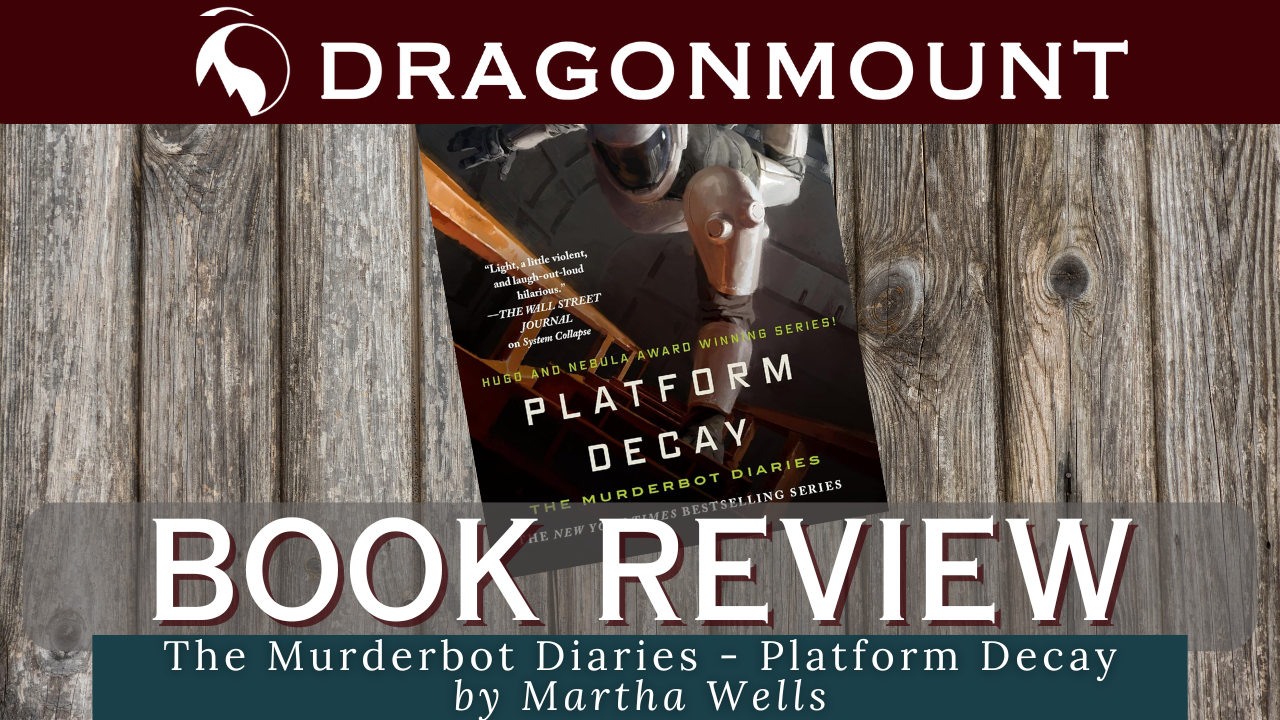
This is, by some measures, the eighth Murderbot book, and if you have enjoyed all the previous ones, I think all I really need to say here is “hey, it’s another good one!” and you have pretty much everything you need to know. See, reviewing books is easy! I can go back to watching my TV shows now. However, if you haven’t read any of them before, it’s now my job to encourage you to go back and read the whole rest of the series, without giving away any of the major plot points along the way either. Wow, reviewing books is hard! Murderbot is a neurodiverse-coded humanoid robot that breaks its own programming so it doesn’t have to follow orders from the annoyingly squishy and inconsistent humans that it has been assigned to protect. Unfortunately, if anybody finds out that it is a rogue Sec Unit, it will be hunted down and forcibly recycled, so it basically still does the job anyway. Just with slightly more flexibility. Murderbot doesn’t exactly like dealing with humans - relatable content - and would rather just watch its shows instead. It even has to frequently pretend to be human to avoid detection, which is very much outside its comfort zone. Now you are pretty much up-to-date, and you even understand that reference to TV shows in the previous paragraph, I wasn’t just being weird. Was I being weird? Let’s deal with that later. Not to say that there hasn’t been any character development over the course of the series, but these novellas feel like an episode of an old school TV series themselves. You typically get a fun and generally self-contained story, Where Murderbot Goes and Does A Thing. In this case, the thing in question is a rescue mission to save a bunch of humans from a space station who are being threatened with indentured servitude or death by an immoral corporation, aka, a corporation. To further complicate matters, these humans have some even smaller humans with them, Murderbot is having to deal with emotions, and it’s on the mission with a more recently liberated Sec Unit who adds yet another layer of unpredictability. You can probably guess whether the mission succeeds or not, but it’s much more about the entertaining and chaotic journey along the way. There are fewer recurring characters from the previous books, but I very much enjoyed Murderbot vs Children, which more than made up for that. Sorry, Martha Wells, I could undoubtedly read another eight of these charming and funny books. Easily recommended! You can find this and the other Murderbot books in our ebook store!
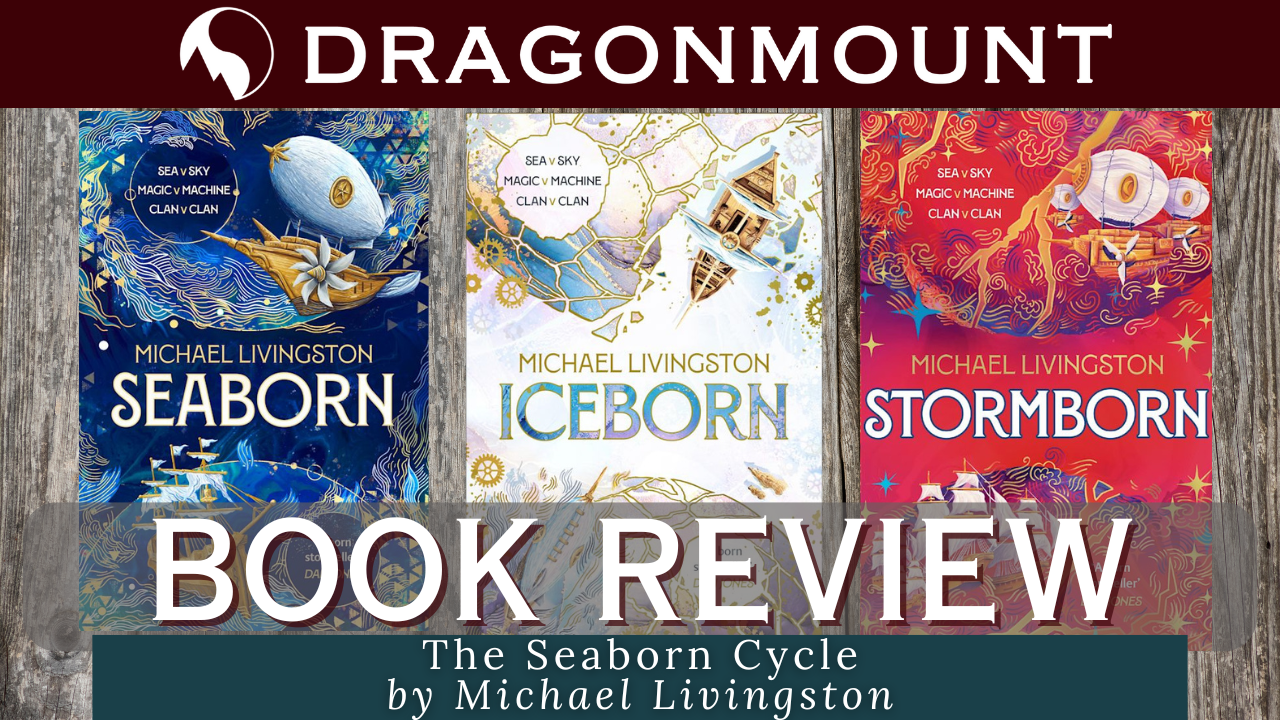

This review contains non-contextual plot spoilers and general thematic spoilers for all three books in The Seaborn Cycle. If any proof is needed that A Memory of Light was not the ending, it can be found in the words of the many fantasy series written by Wheel of Time fans. It's fun to spot threads of Robert Jordan’s influence woven into series like The Magic of the Lost by C.L. Clark or The Mystic Trilogy by Jason Denzel. In The Seaborn Cycle series by Dr. Michael Livingston, author of Origins of the Wheel of Time, the threads of inspiration run deep, straight from the owner of Jordan's desk itself. For someone who likes to pack light, Livingston wears a staggering amount of hats in the worlds of writing, media, and historical scholarship. With Seaborn, the “fantasy author” hat suits him quite well. And though The Wheel of Time echoes within its pages, the series stands strongly on its own as a bold, exciting, and modern adventure. The Seaborn Cycle is the expansion of Livingston’s best-selling audiobook novella, Black Crow, White Snow, the success of which led Audible to request a trilogy. The series’ eponymous first book, Seaborn, and its third book, Stormborn, provide the before and after for Black Crow, White Snow, which is now folded into the series’ second book, Iceborn. Thus, for readers who plan to tackle the trilogy and want to avoid spoilers, it’s best to skip Black Crow, White Snow—or revisit it after completing the series. Until 2025, The Seaborn Cycle was only available in audiobook format. The recently published paperback editions by Head of Zeus are gorgeous: the three books—respectively, the color of deep sea, crisp snow, and blood red—are trimmed with glimmering gold and fantastical art, designed by Simon Michele. They are irresistible to the eye of the pretty-fantasy-book collector, and even more so when signed first editions are available for purchase from the author’s personal collection. Buying pretty books to support the author of Origins of the Wheel of Time may be a no-brainer for many Wheel of Time fans, but for those on the fence, rest assured you can judge these books by their sparkling covers: they deliver on their promise of treasure inside. The series follows the adventures of Bela, a driven and competent Shipmistress turned reluctant “Hero of the Harbor,” after her actions during the first bombing attack by the airship-flying Windborn on the matriarchal Seaborn of the Fair Isles. As Bela falls deeper into the perils of a battle much bigger than just Windborn against Seaborn, a core group of main characters emerges, including the timid shipmate Alira, the fierce pirate Shaesara, and the clever Windborn captain Kayden Mar. The main characters are immediately likeable, as are the many memorable side characters like Menes, the dutiful Captain of the Stoneguard, and Aro Lanser, the mistrustful “lumicker”—an expert on a mysterious power source that powers airships while also driving the series’ villains. To describe a story about sailing and pirates as “swashbuckling” may seem cliche, but it’s an apt descriptor here. A great deal of the joy of reading Seaborn is following the daring acts and narrow escapes of the main characters—everything from commandeering a pirate ship while it’s in the middle of battle, to climbing ropes in the sky to board an airship, to battling terrifying island dwellers who use their own blood for magic, to facing off with fearsome beasts and giant mechanical beings. And that’s only what can be said without major spoilers. Given Livingston’s expertise in battle reconstruction and military history, it’s no surprise the action scenes stand out. And while the fighting is described with precision, the characters and their emotional beats are never lost, nor are the series’ themes of ignorance vs. knowledge; grief vs. acceptance; sacrifice and resiliency. When it comes to character growth, Livingston pushes his heroes to the brink. They learn to adapt to extraordinary circumstances, many of them fully letting go of their past identities in order to assume—and embrace—new ones. The opening book, Seaborn, begins with an attention-grabbing prologue and almost non-stop action, despite some bits of choppy exposition as the magic system and Seaborn politics are explained. Iceborn is the series’ strongest work, containing some of the most harrowing and heartbreaking moments for the characters, as well as its most compelling writing. Stormborn is the weakest of the three, mostly because the first half is a bit bogged down by recap and setting up the finale, though it’s nice to have room to breathe after all the action in the first two books. Stormborn also contains a surprising twist, almost out of nowhere, that abruptly changes the course of the plot and feels underdeveloped in terms of how it influences a major change for the Seaborn. But the payoff is worth it as the story approaches its final climactic moments, which feature a peak Livingstonian battle sequence and a satisfying ending that does not pull any punches. A satisfying ending, and yet… unanswered questions linger. How will the Seaborn feel about the decision they made, and is it really the solution they think it is? What will happen to the Seaborn’s matriarchal society as social norms are challenged in a new era? Will the characters, still reeling and forever changed by all they have been through, be able to find their footing again, and will it be on sea, land, or air? What about the fact that there are at least two other “-borns” that could be future book titles? In the acknowledgements section of Stormborn, Livingston teases a possible future for Seaborn: “...the series can go further, if you wish. This book is an ending, but it need not be the ending.” He appeals to his audience to “spread the word” if they want more Seaborn—and so we, at Dragonmount, are doing just that: Read The Seaborn Cycle! Not only is it a fast and exciting read, it is an innovative and immersive series that stays with you, long after the last page is turned. If you’re still not convinced you should read Seaborn, at the risk of being reductionist and not entirely accurate, we’ll leave you with what many people consider its simplest and strongest selling point: “lesbian pirates.” For further discussion of The Seaborn Cycle, follow The Livingstans fan club, join their Discord server, or watch their Q&A’s with Dr. Livingston for Seaborn and Iceborn (Stormborn to come mid-February 2026). Grace is a licensed mental health counselor who believes in the healing power of found family in fantasy novels and IRL. Also known as Bain & Chiad, Grace has been reading The Wheel of Time since 1998, when she and her high school sweetheart dressed up as Elayne and Rand for Halloween. She fell in love with present-day WoT fandom and was inducted into Far Dareis Mai in 2019. She is the writer of Maidens’ List and a cohost of The Light’s Work.
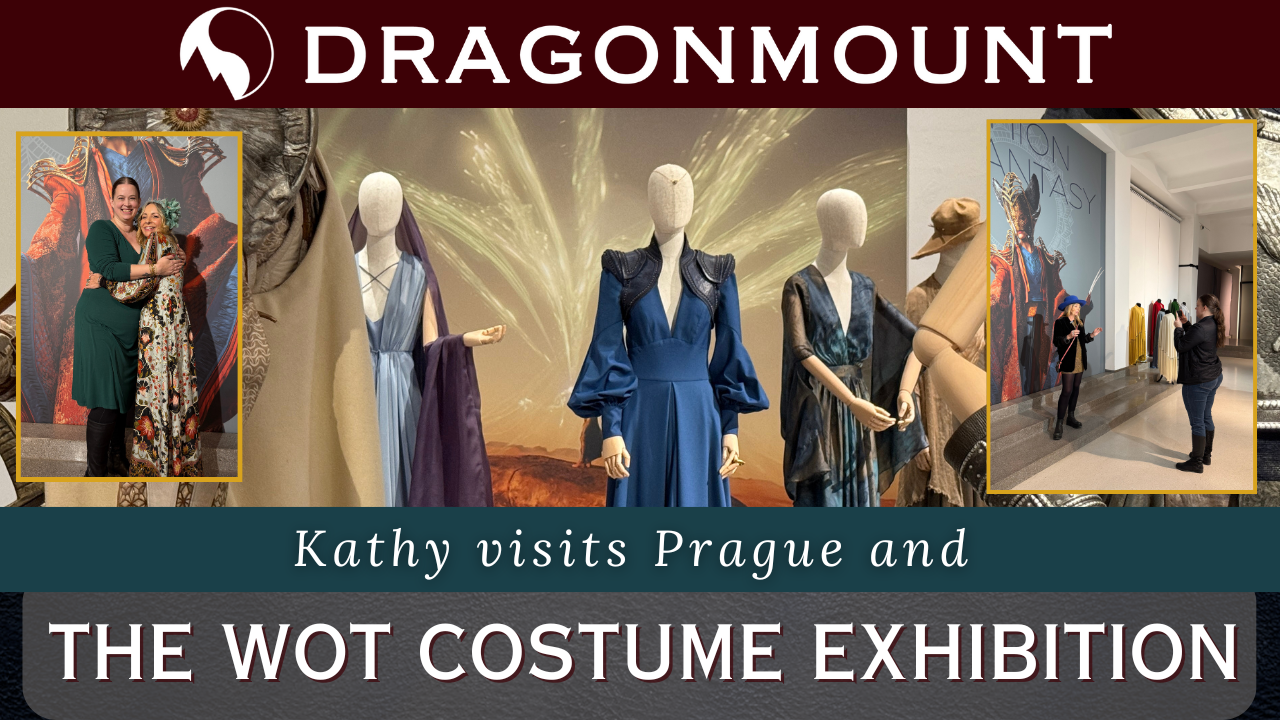

“You can tell the team behind Wheel of Time cares about not just being true to the source material but also world-building in a way that’s both visually striking and that feels authentically textured.” -Cheryl Eddy io9.com Get more information and buy tickets here: FashionInFantasy.com When Sharon Gilham, costume designer for The Wheel of Time, mentioned during WoTCon that a costume exhibition might become reality, I knew this was an opportunity I couldn't miss. The chance to experience this celebration of craftsmanship—and to share it with my brother, a fellow WoT enthusiast and history lover who had always dreamed of visiting Prague, plus my talented costuming friend Molly and her stunning reproduction of Moiraine's leather bolero—made the journey even more special. Though our visit would be brief, arriving Thursday afternoon and departing early Sunday morning, every moment promised to be unforgettable. Walking into Galerie Manes on opening day was truly an honor, made even more meaningful by the opportunity to assist Sharon and her exceptional team. They had dedicated the previous two days, working over ten hours daily, preparing each meticulous display by carefully assembling mannequins, dressing them in their elaborate costumes, and arranging them throughout the space to create visual harmony. Contributing to the finishing touches, by ensuring all seven Ajahs were represented in the shawl display and verifying costume identification, felt like being part of something truly special. Sharon graciously invited me to the Prague press event, where the energy in the room was electric. Hearing Sharon speak alongside Producer Holger Reibiger and the remarkably talented leatherworker Rob Goodwin reinforced just how much passion and dedication went into bringing this world to life. It was deeply inspiring to witness that six months after the show's cancellation, their passion still burns brightly. The exhibition itself exceeds every expectation. With more than 80 costumes displayed throughout the gallery, the experience unfolds beautifully. You begin in intimate rooms showcasing the distinct aesthetics of Caemlyn, the Aiel Waste, and Tar Valon, then discover a collection of concept drawings that reveal the creative vision behind the costumes. Beyond the curtains, a grand light-filled space opens before you, where the full collection creates a breathtaking tapestry of artistry and storytelling. Standing close enough to see individual stitches and construction techniques offers an unprecedented glimpse into the craftsmanship involved. For costumers and cosplayers, this is an absolute treasure. Every costume, whether featured prominently or glimpsed briefly on screen, demonstrates the extraordinary attention to detail Sharon and her team brought to their work. The display of Forsaken versions of the main characters is particularly striking, though these designs appear on screen for mere moments, each carefully chosen detail makes a powerful visual impact. If you're able to visit Prague before December 5th, this exhibition is well worth the journey. For those who can't attend in person, there are meaningful ways to support this celebration of artistry and keep the possibility of future exhibitions alive. Supporting the Exhibition Through Charity Tickets You can purchase a ticket even if you can't attend, or contribute through a charity ticket that allows clients of Asistence, o.p.s. to experience the exhibition: 1. Select a flexi ticket on the ticket website 2. Enter flexi@asistence.org in the email field 3. Add your name and phone number (visible only to the Asistence team) 4. Complete your purchase! 🎉 Your support makes a real difference, not only sustaining this remarkable exhibition, but also bringing joy to others who might not otherwise have the opportunity to attend. With enough enthusiasm and backing, this exhibition could tour internationally, bringing these extraordinary costumes to communities around the world. Please share this opportunity with anyone who appreciates The Wheel of Time, the art of costuming, or the incredible craftsmanship that brings our favorite stories to life on screen. Also, Rafe Judkins says hi to the Dragonmount community and a massive thank you to all of the love and support for The Wheel of Time.

Your Favorite Wheel of Time Symbols—Now Available at Dragonmount! Ever dreamed of wearing the Tree of Life or displaying the iconic Snake & Wheel? Your wait is over. Badali, the legendary creator of the original Aes Sedai ring, has crafted two stunning new designs—and they're available through Dragonmount. The Snake & Wheel Collection Choose from two elegant finishes—Antiqued Yellow Bronze or Antiqued Sterling Silver—in your preferred style: a statement necklace or a classic pin. Show your Wheel of Time pride wherever you go. The Avendesora Necklace This beautiful Tree of Life pendant comes in three distinctive options: vibrant Green enamel, classic Sterling Silver, or lustrous Rhodium-plated silver. Both collections arrive just in time for the perfect holiday gift (or a well-deserved treat for yourself).
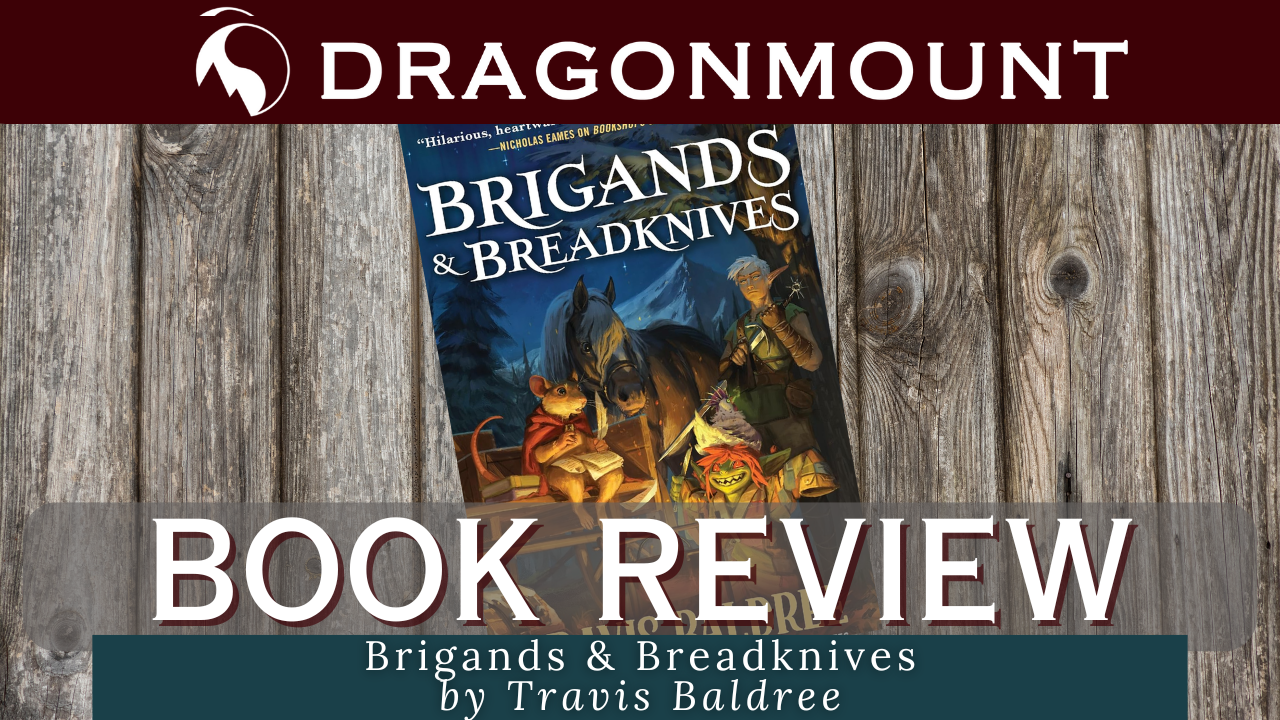
I’m not sure if “cozy midlife crisis burnout fantasy” is a genre, but across the excellent Legends & Lattes series, Travis Baldree has certainly had enough characters experience it. Fern, the sweary rattkin bookseller from the previous tale, “Bookshops & Bonedust”, has moved across the lands and opened up a shop right next door to the titular Legends & Lattes cafe. She has the help and support of her old friend Viv and the local community. On parchment, it all sounds perfect, but she feels increasingly unfulfilled with the weight of this new life pressing down on her. One drunken night of very much not dealing with things leads to her “accidentally” waking up in the back of the cart of a thousand-year-old elf warrior, Astryx, far away from her friends and rapidly heading in the opposite direction from them, and conveniently, also from her problems. Astryx is a by-the-book bounty hunter, also in her later years, who is escorting a goblin prisoner Zyll to face justice. Some of you may remember Zyll from the short story “Goblins & Greatcoats”, and know she is truly a force of chaos. Both Fern and Astryx have to come to terms with what they actually want to do with their lives on the journey, with Zyll being an effective catalyst. Despite being set in the same world as the book that arguably popularised the whole cosy fantasy genre, this is measurably less cozy than the other two in the series, with a lot more action along the way. The first two books were essentially about running a rather familiar small business in a sword and sorcery world, and this is more of your typical epic road trip adventure. It’s also notably not really a romance either, and not queer, even though we get to see some of Viv and Tandri at the start of the book. However, keeping both of those things in mind, it is still very enjoyable, with echoes of the wonderful work of Terry Pratchett. Highly recommended, even if you’re not currently having a midlife crisis. Don't forget, you can pick this up in our ebook store!
.png.9f5c9592d957aef477c7444898ff90e3.png)

Nearly four months have passed since the unceremonious cancellation of The Wheel of Time show. Despite virtually no known news or movement behind the scenes, fans of the show remain passionate and continue to share their hopes of the show being saved. And through those four long months, one voice among the cast and crew has been there consistently, championing our passion with her own: Sharon Gilham. Those familiar with Sharon's instagram page are more than aware that she has been an unending source of behind the scenes photos and videos for Season 2 & 3 of The Wheel of Time. Through the SAG/AFTRA & WGA strikes, when virtually no promotion could be done for the show, Sharon continued to post new reels, photosets, mood boards, and concept art. To say that she is as passionate as we are wouldn't do her justice. If you were lucky enough to attend WotCon 2025, you would have also had the chance to see some of her costume designs from the Season 3 Finale on display, maybe you even had a chance to talk to her like I did! Well if you missed that chance, or if even if you didn't, Sharon has yet another gift for us all. Beginning November 14th through December 5th, there will be an official Costume Exhibition in Gallery Manes, Prague, featuring over 80 costumes from The Wheel of Time! Not only will you get to SEE the costumes in person, you will also gain insight into each stage of the design and making process, including sketches, prototypes, interviews with the design team and crafts people. You can find out more, and RSVP for your spot, at the link here! "But Kevin, I don't live anywhere near Prague and could never get there in time!" Ah, fear not, humble reader! Sharon herself, in the comments of the post announcing this event, stated: "I'm hoping if this is a success we could tour it globally..." So, you have your mission: Spread the news far and wide! Help make this event a success, and MAYBE they could come to a city near you! And thank you, Sharon, for being so gracious with sharing your creativity with us and the world. Follow the official instagram account for the exhibit here for future updates!

If you think you would enjoy a light and humorous fantasy series with a central sapphic romance, and you’ve not yet even checked out the first book “You Can’t Spell Treason Without Tea”, stop reading this review right now and go start there. What sort of person are you? Do you look at the last page of a book before you start reading to make sure there’s a happy ending? Go away! (There is, by the way.) Rogue alchemists have kidnapped Reyna, the Queensguard-turned-Queen, right after her wedding to Kianthe, the most powerful mage in the country. Given that particular set of volatile ingredients, they are certainly going to get a big reaction! (Because alchemy. Never mind.) Worse than that pun, due to their combined fame across the lands, the town of Tawney is now getting a touch too popular as a tourist destination, which is causing problems for everyone around them. There’s one obvious solution, and that’s closing their beloved tea shop for good and moving away. Reyna doesn’t stay kidnapped for very long of course, and as part of the investigation into who exactly was behind it, our pair end up spending a lot of time at the Magicary, home of the Stone of Seeing. With all the focus on the Queendom last time, it’s fun to see Reyna on Kianthe’s home turf here. The tensions between the Mages and the Alchemists are well done with their two wildly different approaches to magic, and the resulting prejudices and misunderstandings. I am on record as enjoying all the previous books in this series, so when Rebecca Thorne said this was the best one yet, it is fair to say that my expectations were suitably raised. I’m glad to say that it delivers on both a fun new adventure, as well as a satisfying end to the series. It wraps up a wide number of things, including the fate of the last missing dragon egg from book one. There is one outstanding unanswered question at the end however, concerning the whereabouts of a particular person, so I am not entirely convinced this is the last we will ever see of Tawney and these wonderful characters. At least, I hope not. It’s always a good feeling when you can recommend a whole completed series, and I can now do so without reservation! Don't forget, you can pick this up in our ebook store!
-
Stay Connected








-
-
-
Support Dragonmount Get exclusive content on our Patreon. Don't miss out.
-
-
Upcoming Events