


Caelan Arendor
-
Posts
185 -
Joined
-
Last visited
Content Type
Profiles
Forums
Store
Gallery
Blogs
News
Downloads
Events
Everything posted by Caelan Arendor
-
Verin Mathwin is one of the most striking figures in our book series. I must admit that it was only quite late — though I can no longer recall the exact point in the story when - I began to suspect that this seemingly unremarkable, slightly scatterbrained, maternal figure might be something more than a curious scholar and teacher of the Brown Ajah. Her belonging to two Ajahs compels her to play a dual role with a double charge: on the one hand, she gathers information about the Ta’veren, delves into prophecies, and studies the very structure of power; on the other, she has sworn allegiance to the Dark One and must carry out his commands and weave intrigues. Yet it becomes increasingly clear that she uses her position within the Black Ajah to study it from within and to identify its members. In the end, she meets a martyr’s death: Verin Mathwin died after revealing to Egwene al’Vere a decisive secret about the Black Ajah. She took a poison of her own making to ensure she could deliver her revelations before the Black Ajah silenced her. Thereafter she passed peacefully, knowing that her sacrifice had strengthened the Light. As I mentioned at the outset, I hold Verin in a certain esteem, and I would be delighted to hear your thoughts on her.
-
 Brown Ajah, Mission: Knowledge and scholarship As proponents of knowledge and research, they serve as the guardians of the White Tower’s library. They are regarded as scholars, and I have the impression that the main focus of their studies lies in the exploration of human history. As a side note, I must remark that I am astonished at how little, despite their efforts to shed light on the past, has actually been preserved from the Age of Legends (I have spoken about this elsewhere). What I particularly value in them is that they remain largely untouched by political machinations and seldom involve themselves in such intrigues. Their focus rests on research, not on schemes. Of course, there is also an “however” with the Browns: many of them appear absent-minded or impractical. They forget everyday matters because they are so deeply absorbed in their studies. They are often considered otherworldly and struggle to interact with people beyond their books and research. Still, this does not make them truly unsympathetic to me. About one very special representative of the Brown Ajah I intend to write in a future piece. I suspect you already have an idea who that might be, don’t you?
 -
What You Can Do to Support the Wheel of Time Cancellation
Caelan Arendor commented on Kathy Campbell's news item in TV Show
Thanks for your engagement! If even a fraction of those who have read The Wheel of Time wish to see the story visualised—perhaps together with one or more family members enjoying a cosy evening of television—I believe continuing the series should prove worthwhile for the production team. Just a thought. -
The White Ajah is devoted to philosophy and the pursuit of truth through pure logic. While admirable in theory, this creates several unlikeable traits: The White Ajah’s fixation on logic and philosophical analysis usually makes them appear aloof and distant. This trait leads them to regard human feelings, emotions, and desires as unimportant and insignificant. Their unapproachability and detachment make it difficult for us as readers to feel warmth toward them. The strict adherence to logical thinking also resulted in problematic decisions. Ferane Neheran failed in her efforts to unite the White Tower because she disregarded emotional considerations and viewed politically wise compromise as beneath her dignity. Likewise, Seaine Herimon did not cover herself in glory in her attempt to expose the Black Ajah. Although I am familiar with the three fundamental laws of logical argumentation—namely, the Law of Non-Contradiction, the Law of Identity, and the Law of the Excluded Middle—life and human relationships unfold beyond these rigid rules, don’t you think?
-
I don't remember him stabbing him at all, Mordeth simply disappeared like smoke through a crack in the wall; or did I forget some details here? It's quite a time since I read Volume 1 (tEotW), so forgive if I err...
-
We now turn our attention to the Green Ajahs of the White Tower. They are often referred to as the Battle Ajah, for they have dedicated themselves to the active struggle against evil, the Dark One, and his followers and minions. Taken as a whole, their character is not without appeal, though the Greens are at times prone to arrogance and overconfidence. Internal quarrels among them are by no means uncommon. I seem to recall that at the fall of the kingdom of Malkier the Greens distinguished themselves chiefly by their absence, just as the Green Ajah played no part—or at best a very minor one—at the Battle of Tarwin’s Gap. The Greens must also endure the reproach of tolerating quarrels and rivalries among themselves, which considerably undermines their efficiency. Who among you now rises in defense of the Greens—are there any voices to be heard on their behalf?
-
There are Problematic Traits of the Blue Ajah, though often celebrated for its noble ideals: seeking the causes behind events, championing justice, and exercising political influence. At first glance, these qualities appear admirable—who would not value the pursuit of fairness and the uncovering of deeper truths? Yet, beneath this lofty mission lies a more troubling dimension. While the Blues claim to fight for justice, their methods frequently blur the line between advocacy and manipulation. Their manipulations often remind me of puppeteers, making the marionettes dance upon their strings according to their will. Care for some examples? Moiraine’s guidance—or ‘leadership’—of Rand, though cloaked in the guise of a benevolent advisor, is nonetheless manipulative. She withholds information and truths, nudging him into actions that appear to serve her own purposes. The Blues frequently involve themselves in the political affairs of the day, claiming to act under the banner of justice, yet the true purpose of their interference is often to strengthen their own influence over rulers and peoples. Taken as a whole, their conduct remains dubious, though they exhibit fewer repellent qualities than some of the other ‘hues’ within their craft. Have a nice weekend and stay good! Best 73 from Calean, --.../...--
-
Let us turn our attention today to the Red Ajah. What do we truly know about them? They hunt men who can channel and subject them to gentling—a fate that often plunges these men into profound despair and ultimately death, once their will to live has been extinguished (Such a deed I would unhesitatingly deem to be murder). The nature of the Red Ajah is frequently marked by a pathological hatred of men, whom they treat with contempt regardless of guilt or innocence. Their fervent zeal sometimes leads to miscarriages of justice, as they bypass proper trials. Their obsession with eradicating male channelers blinds them to other, often far greater and more perilous threats, and estranges them from potential allies. Here we must name one of the most unsympathetic characters to stride across the whole of the cycle: Elaida do Avriny a’Roihan. Once Amyrlin, she ruled with paranoia and cruelty, silencing dissent and crushing opposition. Her harsh leadership style alienated many sisters and fostered instability. Elaida do Avriny a’Roihan, once she seized the Amyrlin Seat, sought to immortalize her reign through vast and extravagant building projects within the White Tower. (I don't remember the details, but I do not believe, that she ever intended to construct a golden ballroom....Without, of course, wishing here to make any allusions!) So much for today, its already late into the evening and I wish to finisch a novel (SF) of Frederic Brown. Wish you allt the very best, 73 from Calean, --.../...--
-
The Aes Sedai are often portrayed as strategic, proud, mysterious, flawed, divided, and overly assured. These qualities, well-documented in both the lore and scholarly commentary, contribute to their reputation as one of the most morally complex groups in fantasy literature. In a certain sense, however, their conduct mirrors the human traits of our real world; nothing that occurs there is unfamiliar to us, and some aspects even appear in an intensified form within today’s political affairs.
-
While reading The Wheel of Time, I often encountered passages in which I struggled not to fall into the all-too-familiar clichés surrounding gender roles. The Aes Sedai in particular made it almost impossible for me to adopt a positive—or even neutral—attitude toward them. How do many, though not all, of these female wielders of magic present themselves to the initially unbiased reader? They display a certain, at times considerable, arrogance toward non-channelers, making sure the common folk feel it, while leaving any trace of interpersonal empathy aside. They cultivate secrecy and suppress vital information not only from the general populace but even within their own ranks. For instance, the very existence of the Black Ajah is categorically denied, though knowledge of them might, under certain circumstances, prevent misfortune. The Ajahs themselves are often divided, guarding their secrets and meeting one another with suspicion—fertile ground for the eventual fracture of the White Tower. Jealousy, elitism, and pride lay the foundation for the institution’s decline. I don’t intend to dampen the enthusiasm of devoted readers, nor to offend anyone; but isn’t this forum meant to welcome a diversity of viewpoints? In future blog posts, I intend to articulate the character flaws of the individual Ajahs, and I look forward to your responses.
-
Aes Sedai with family ties, husbands, or children appear to be a rare exception. In that sense, they could be seen as forerunners of modern career women, devoting themselves primarily to their duties and responsibilities within the White Tower while avoiding emotional attachments whenever possible. The only exception I am aware of seems to be Cadsuane Melaidhrin, who is mentioned somewhere as having had children in the distant past. Beyond that, I cannot recall any other example of an Aes Sedai maintaining family bonds. Moreover, due to their longevity, Aes Sedai generally outlive their children and grandchildren, should they ever have had any. Do you have information I may have overlooked?
-
The Creator is mentioned muliple times as the being who spun the Wheel of Time and imprisoned the Dark One. The Creator does not intervene in the world, nor is worship directed toward them. Peopl seem to talk about him, but there seems to be neither veneration, or any sort of prayer directed towards him. Isn't that somewhat peculiar? On the other hand there is the Dark One, a direct opponent to the Creator and though feared by most people, there must be quite a lot of them (Darkfriends mainly) who revere and even venerate him. So these people obiously adhere to some sort of religion, even though it's the Shadow and not the Light they enshrine. The group that comes closest to a religious order are the Children of the Light, though their creed is largely confined to a fanatical persecution of those they deem their enemies. It seems to me that the Creator of the universe is left wanting, since not even his most steadfast champions, the Aes Sedai, display the slightest trace of a religious inclination. Correct?
-
Thank you for your comment, I must have forgotten this detail, for its already quite a while, when I finished reading the whole epos. Padan Fain must have shed his outward semblance and all trace of ordinary human bearing with dreadful haste, descending into the pitiful shadow of a form he now parades before the world.
-
Moiraine, like most of her order, once again embodies the great silent ones—mysterious, aloof, and seemingly too exalted to convey even the simplest matters to “ordinary” mortals. I know my criticism is severe, yet with many of our heroines I find myself missing the touch of normal human behavior, and my sympathy for them remains rather limited.
-
Who is the beggar, clad in rags and hiding his face beneath a hood, who pursues Rand in Caemlyn and forces him to vanish into the crowd? Is it Padan Fain? On the other hand, it is unclear—indeed even unlikely—that Padan Fain could have entered into a symbiosis with Mordeth AND the Dark Lord in such a relatively short time (since the boys had left the Two Rivers), and thus present himself in such a degraded appearance.
-
So nobody tried his luck? I'm a little bit disappointed, it isn't as difficult as you might think. Need any further help from me? Be free to contact me my friends!
-
I found some interesting innundo....
Caelan Arendor replied to Caelan Arendor's topic in Wheel of Time Books
Thanks a lot for showing me this picture, this guy must realy be well known in your country! I am deeply moved that a Black African is being honored with a statue. Greetings and best 73 from Caelan --.../...-- -
Perrin and Egwene find themselves in the hands of the Whitecloaks, and should they reach Caemlyn, they face torture and death. Because of Perrin’s bond with the wolves, they are branded as Darkfriends, and Jaret Byar in particular delights in painting vivid pictures of the fate that awaits them. As a side note: while reading The Wheel of Time series, I was never entirely certain whether Byar was merely an odious fanatic or in truth a Darkfriend—just my personal impression. Now to my question: why does Byar offer his prisoners the chance to escape, even providing them with the means (he lets a stone blade fall beside Perrin)? Is it simply his fear that the wolves might wreak havoc upon the company? Or is it a more insidious scheme—to let the captives flee only to hunt them down and kill them while on the run? I would welcome your thoughts.
-
In Whitebridge, Mat and Rand are separated from Thom during an attack by a Fade. Thom abandons—or perhaps loses—his instruments as he hurls himself against the Myrddraal to save the boys. From this event, Rand comes into possession of the flute, which sustains him during his long journey to Caemlyn by providing a means of livelihood. Yet the fate of the harp remains uncertain. Was it lost, or did Rand dispose of it along the way? Has anyone a clue?
-
Artur Hawkwing was, as is well known, one of the most renowned rulers, a so‑called “High King” who, in the tenth century NE, reigned over all the lands west of the Spine of the World. He dispatched a great fleet—under the command, I believe, of his son Luthair—across the Aryth Ocean, whose descendants would later return as the Seanchan. In the history of humankind there have been many great generals and conquerors, a few of whom may be mentioned here: Alexander III of Macedon ruled from 336 BC until his death in 323 BC; Temüjin, known as Genghis Khan, united the Mongols in 1206 and by 1227 had built the largest empire in history, encompassing China, Central Asia, and parts of Eastern Europe; Gaius Julius Caesar expanded the Roman realm through the Gallic Wars from 58 to 50 BC and the Egyptian campaign of 48–47 BC, thereby strengthening his power base, and he is regarded as one of the most influential commanders of antiquity; William the Conqueror seized England in 1066 at the Battle of Hastings; Attila the Hun ravaged much of Central Europe in the 440s–450s AD; and Otto the Great defeated the Hungarians in 955 at the Battle of Lechfeld. Do you think Robert Jordan may have taken one of these figures from our own history as a model for his creation of Hawkwing? My own preference would be Alexander the Great, whose empire likewise collapsed immediately after his death. Do you have another suggestion?
-
who had the most women or "wives"? Mat, Perrin, or Rand?
Caelan Arendor replied to urrutiap's topic in Wheel of Time Books
Perrin seems to be the most "conservative" one...He obviously ist the least inclined to become a womanizer. He strikes me as so impeccably well-behaved that I almost start to feel guilty about my own youthful years...😁 -
The name "Hend the striker" is mentioned just once in the wheel of time series, namely in "A Memory of Light" Vol XIV. Throughout my search for a real person with this name on the internet, I came across a certain John Henry, whom, due to my European heritage, I unfortunately never heard of before. As it turned out, John Henry was an African American laborer who manually drilled holes in rock in order to place dynamite into them. He is said to have won a competition against a steam-powered drilling machine but paid for this triumph with his life due to total exhaustion. Did you know about this connection with the Age of Legends?
-
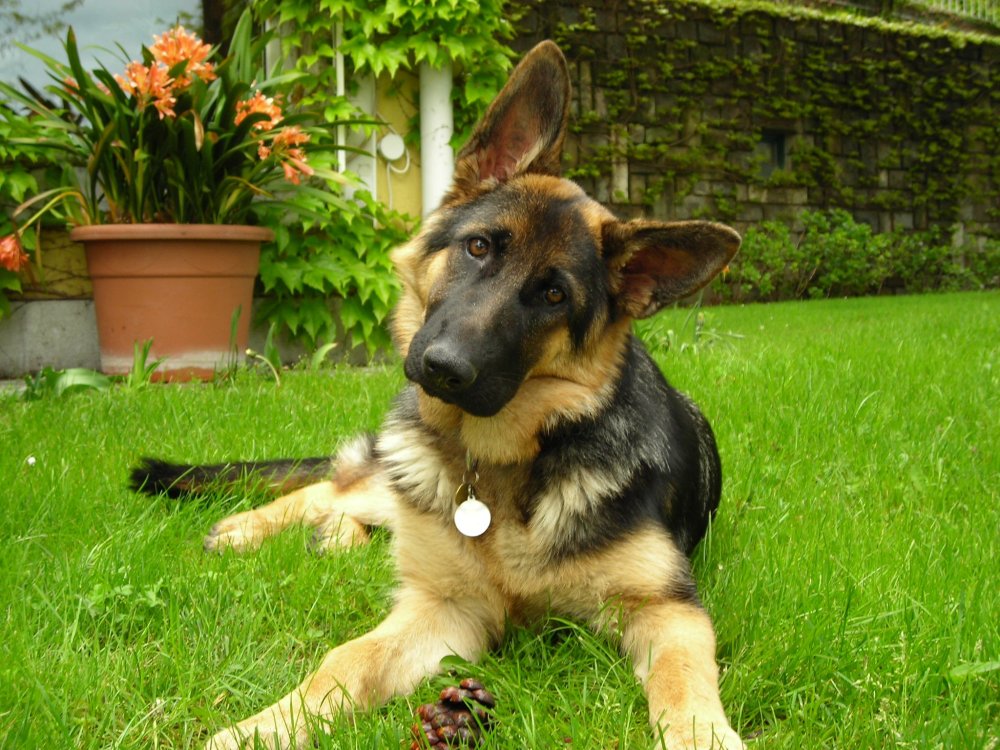
I have a profound affection for wolfes and wolfdogs (and of course to their more tame cousins the german shepherd dogs!). I admire their pack cohesion, though governed by a strict hierarchy, yet even the weakest member - the "omega" so to speak - is granted a chance to survive. Though he does not receive the choicest portion of the hunted game, he never departs entirely empty-handed. Now, in the tale, we learn that Perrin possesses the astonishing and wondrous gift of communing with wolves, even counting them as his allies. How is it that throughout the epic, Perrin resists, with every fiber of his being, accepting this ability in a favorable light? Perrin's attitude has always remaied inscrutable to me. If it were not for these circumstances I have described here, Perrin would be, for me, the second most likable person in the entire story (after Matt of course! 🥰) I would appreciate yours thoughts my friends...
-
If the mints had any significance or power to protect our heroes, Shouldn’t Moiraine have warned the boys never to part with those coins? As far as I can remember, they were handed out without any specific comment.
-
But we don't really know of channeling, do we? At least there were no outwars sign of it whatsoever (fire, storm, mental control??) I always thought, that the occurrence on the boat was his second supernatural action, but of course, your point also merits consideration.