

Grace Dareis Mai
-
Posts
8 -
Joined
-
Last visited
Content Type
Profiles
Forums
Store
Gallery
Blogs
News
Downloads
Events
Everything posted by Grace Dareis Mai
-
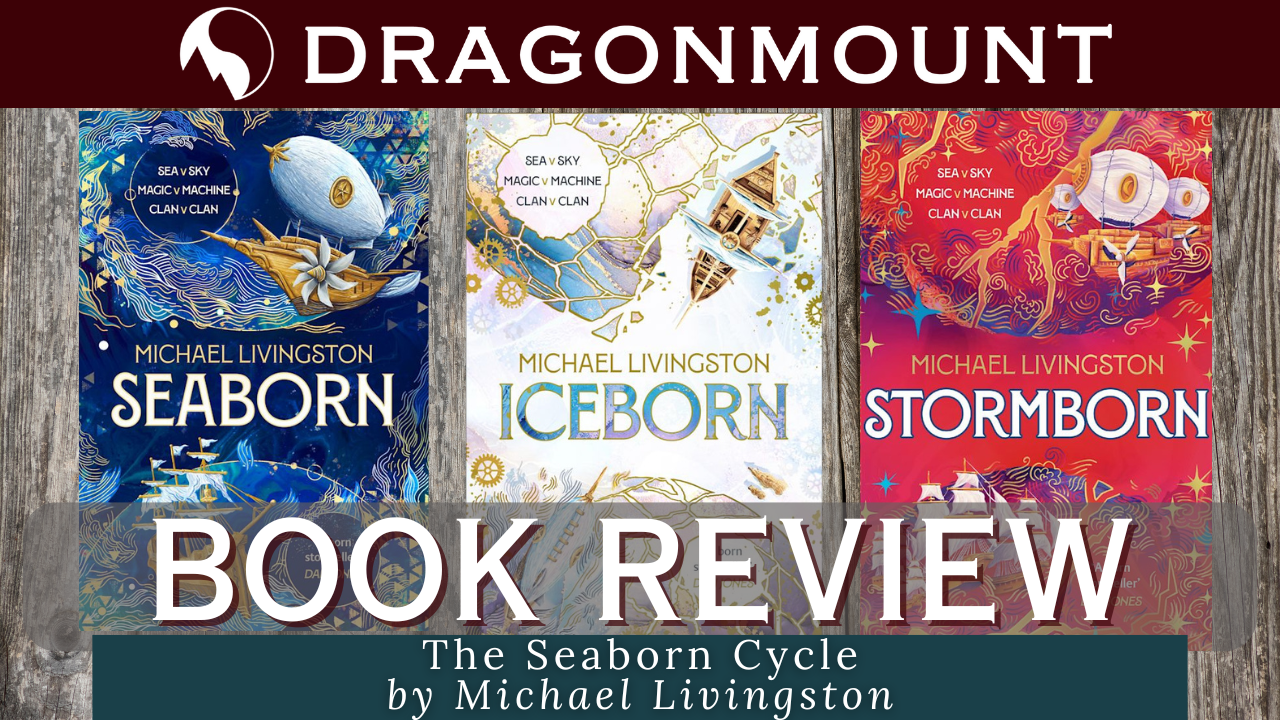 This review contains non-contextual plot spoilers and general thematic spoilers for all three books in The Seaborn Cycle. If any proof is needed that A Memory of Light was not the ending, it can be found in the words of the many fantasy series written by Wheel of Time fans. It's fun to spot threads of Robert Jordan’s influence woven into series like The Magic of the Lost by C.L. Clark or The Mystic Trilogy by Jason Denzel. In The Seaborn Cycle series by Dr. Michael Livingston, author of Origins of the Wheel of Time, the threads of inspiration run deep, straight from the owner of Jordan's desk itself. For someone who likes to pack light, Livingston wears a staggering amount of hats in the worlds of writing, media, and historical scholarship. With Seaborn, the “fantasy author” hat suits him quite well. And though The Wheel of Time echoes within its pages, the series stands strongly on its own as a bold, exciting, and modern adventure. The Seaborn Cycle is the expansion of Livingston’s best-selling audiobook novella, Black Crow, White Snow, the success of which led Audible to request a trilogy. The series’ eponymous first book, Seaborn, and its third book, Stormborn, provide the before and after for Black Crow, White Snow, which is now folded into the series’ second book, Iceborn. Thus, for readers who plan to tackle the trilogy and want to avoid spoilers, it’s best to skip Black Crow, White Snow—or revisit it after completing the series. Until 2025, The Seaborn Cycle was only available in audiobook format. The recently published paperback editions by Head of Zeus are gorgeous: the three books—respectively, the color of deep sea, crisp snow, and blood red—are trimmed with glimmering gold and fantastical art, designed by Simon Michele. They are irresistible to the eye of the pretty-fantasy-book collector, and even more so when signed first editions are available for purchase from the author’s personal collection. Buying pretty books to support the author of Origins of the Wheel of Time may be a no-brainer for many Wheel of Time fans, but for those on the fence, rest assured you can judge these books by their sparkling covers: they deliver on their promise of treasure inside. The series follows the adventures of Bela, a driven and competent Shipmistress turned reluctant “Hero of the Harbor,” after her actions during the first bombing attack by the airship-flying Windborn on the matriarchal Seaborn of the Fair Isles. As Bela falls deeper into the perils of a battle much bigger than just Windborn against Seaborn, a core group of main characters emerges, including the timid shipmate Alira, the fierce pirate Shaesara, and the clever Windborn captain Kayden Mar. The main characters are immediately likeable, as are the many memorable side characters like Menes, the dutiful Captain of the Stoneguard, and Aro Lanser, the mistrustful “lumicker”—an expert on a mysterious power source that powers airships while also driving the series’ villains. To describe a story about sailing and pirates as “swashbuckling” may seem cliche, but it’s an apt descriptor here. A great deal of the joy of reading Seaborn is following the daring acts and narrow escapes of the main characters—everything from commandeering a pirate ship while it’s in the middle of battle, to climbing ropes in the sky to board an airship, to battling terrifying island dwellers who use their own blood for magic, to facing off with fearsome beasts and giant mechanical beings. And that’s only what can be said without major spoilers. Given Livingston’s expertise in battle reconstruction and military history, it’s no surprise the action scenes stand out. And while the fighting is described with precision, the characters and their emotional beats are never lost, nor are the series’ themes of ignorance vs. knowledge; grief vs. acceptance; sacrifice and resiliency. When it comes to character growth, Livingston pushes his heroes to the brink. They learn to adapt to extraordinary circumstances, many of them fully letting go of their past identities in order to assume—and embrace—new ones. The opening book, Seaborn, begins with an attention-grabbing prologue and almost non-stop action, despite some bits of choppy exposition as the magic system and Seaborn politics are explained. Iceborn is the series’ strongest work, containing some of the most harrowing and heartbreaking moments for the characters, as well as its most compelling writing. Stormborn is the weakest of the three, mostly because the first half is a bit bogged down by recap and setting up the finale, though it’s nice to have room to breathe after all the action in the first two books. Stormborn also contains a surprising twist, almost out of nowhere, that abruptly changes the course of the plot and feels underdeveloped in terms of how it influences a major change for the Seaborn. But the payoff is worth it as the story approaches its final climactic moments, which feature a peak Livingstonian battle sequence and a satisfying ending that does not pull any punches. A satisfying ending, and yet… unanswered questions linger. How will the Seaborn feel about the decision they made, and is it really the solution they think it is? What will happen to the Seaborn’s matriarchal society as social norms are challenged in a new era? Will the characters, still reeling and forever changed by all they have been through, be able to find their footing again, and will it be on sea, land, or air? What about the fact that there are at least two other “-borns” that could be future book titles? In the acknowledgements section of Stormborn, Livingston teases a possible future for Seaborn: “...the series can go further, if you wish. This book is an ending, but it need not be the ending.” He appeals to his audience to “spread the word” if they want more Seaborn—and so we, at Dragonmount, are doing just that: Read The Seaborn Cycle! Not only is it a fast and exciting read, it is an innovative and immersive series that stays with you, long after the last page is turned. If you’re still not convinced you should read Seaborn, at the risk of being reductionist and not entirely accurate, we’ll leave you with what many people consider its simplest and strongest selling point: “lesbian pirates.” For further discussion of The Seaborn Cycle, follow The Livingstans fan club, join their Discord server, or watch their Q&A’s with Dr. Livingston for Seaborn and Iceborn (Stormborn to come mid-February 2026). Grace is a licensed mental health counselor who believes in the healing power of found family in fantasy novels and IRL. Also known as Bain & Chiad, Grace has been reading The Wheel of Time since 1998, when she and her high school sweetheart dressed up as Elayne and Rand for Halloween. She fell in love with present-day WoT fandom and was inducted into Far Dareis Mai in 2019. She is the writer of Maidens’ List and a cohost of The Light’s Work.
 -
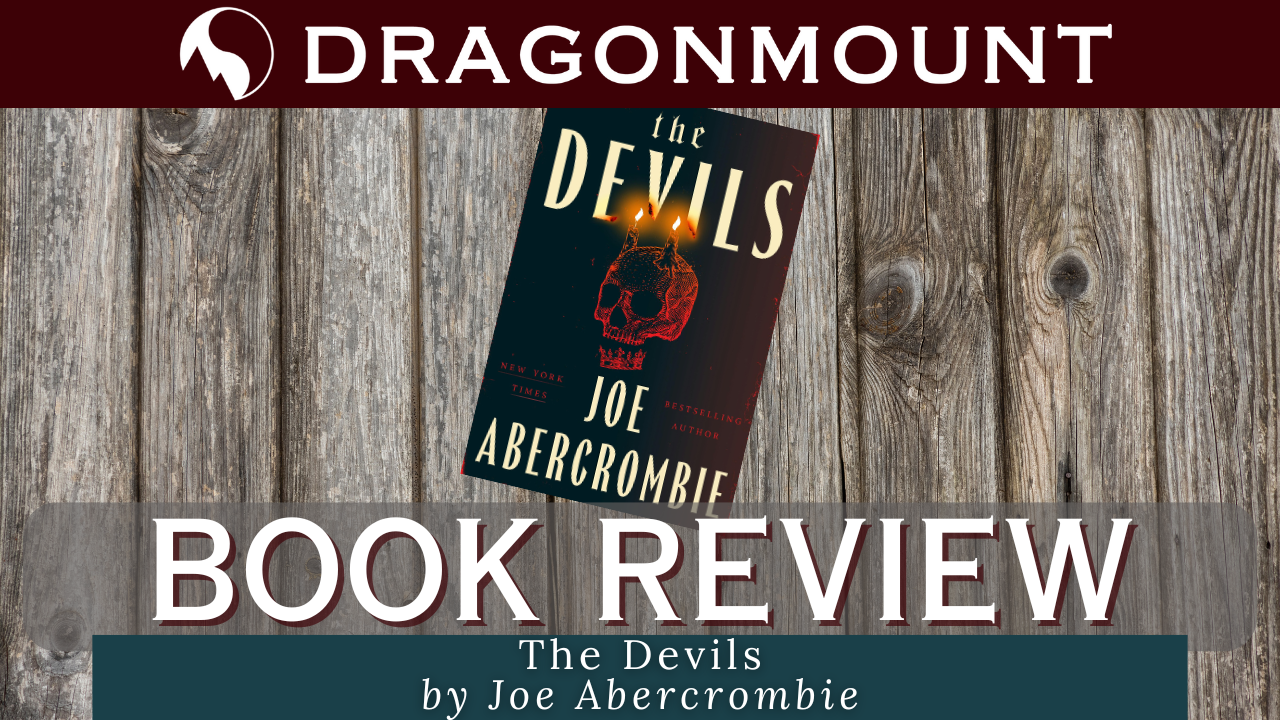 CW: violence, cursing, blasphemy, werewolves, effusive praise Who better to lead us through the darkest timeline than Lord Grimdark himself, Joe Abercrombie? Like a trusted friend who would help you bury a body, Abercrombie doesn’t hesitate to get his hands dirty and do whatever it takes to steer you through a hellish reality. With Abercrombie, nothing is sugar-coated or laced with sunshine-and-rainbows optimism. You can rely on him to portray people at their nastiest, the world at its bleakest, and violence in all its dirty, smelly, bodily fluid-filled detail. No one ever wins or is truly happy, but it’s OK once you accept that, and more often than not, it’s kind of funny. Grimdark is not for the faint of heart, maybe, but as a reader with a heart prone to fainting, I’ve been pleasantly surprised to find that Abercrombie’s writing brings me joy in a way no other author can. His prose is sharp, funny, refreshingly real, and strangely hopeful. No one can make me laugh out loud, snort with cynical agreement, or cry at the smallest act of kindness like Abercrombie can. But when your favorite author releases something completely new and different, you worry a little. Other than a quick detour to publish the YA Shattered Sea trilogy, The Devils is Abercrombie’s first book in 19 years to deviate from the world of The First Law, which consists of two trilogies, three standalone novels, and two sets of short stories. Turns out, when Abercrombie pivots, he just finds new ways to be awesome. The Devils is the first of three in a set of interconnected but self-contained novels. Departing from the fictional “Circle of the World” setting of The First Law, The Devils takes place in a reimagined version of historical Europe, with one dominant religion worshipping a female Savior (but divided over which gender the clergy should be), leading Crusades against elves, and forming secret societies to do their dirty work for them. It’s within this “real world” setting that Abercrombie introduces more fantastical elements than ever before. The First Law books are mostly character-driven political intrigue with some magic. The Devils is a character-driven adventure with a lot of magic. It’s the perfect recipe for a twisted fairytale in which the scary monsters are the heroes saving the princess from a handsome prince—or multiple evil cousin princes, in this case. The Devils brings to mind William Goldman’s classic twisted tale, The Princess Bride, in which a giant, a pirate, and a vengeful swordsman fight corrupt noblemen to rescue the princess. And with a young female protagonist completely out of her depth but surrounded by quirky friends, and with a good chunk of the action taking place on a boat, it’s almost like a warped version of Brandon Sanderson's Tress of the Emerald Sea (also inspired, of course, by The Princess Bride). Perhaps it’s a case of a talented author making it look easy, but The Devils seems like it must have been so much fun to write. Released from the bindings of his own First Law (“It is forbidden…to summon demons, and forbidden to open gates to hell”), Abercrombie is now free to wreak bloody havoc. It’s only with that level of reckless abandon that someone would decide to write a 560-page answer to the question of what would happen if a necromancer, a vampire, a werewolf, an elf, a boastful pirate, a lying thief, and a cursed soldier walked into a bar…and a monk was their designated driver. And so our heroes are not exactly a found family, but a Congregation of sinners forced together into the “Chapel of the Holy Expediency” by clergy with questionable motives. A traditional found family trope might have heroes bonding over personal stories shared by the campfire. The Devils’ devils bond by harassing each other, lying to each other, throwing up on each other, f***ing each other, and trying to kill each other. It’s really very sweet. No, really. Together, the devils face some of the most disgusting creatures you could imagine—think failed science experiments—doing the most appalling, horrific things, and yet this somehow manages to be the most heartwarming book Abercrombie has written. The Devils, ironically, has a lot to teach about friendship, loyalty, humility, honor, courage, and sacrifice. It poses the question of who are truly the monsters in the story (short answer: it’s Abercrombie, so everyone is bad). And, as is so often the case, we find that those who proclaim themselves to be good are the ones to distrust the most, while those who seem evil on the surface may be hiding a heart of gold—or at least bronze. It’s no wonder then that the “worst” of the bunch, Vigga, the savage and bloodthirsty Swedish Viking werewolf, is easily the most lovable character. Even then, it’s not that simple in The Devils. No preconception of any character is safe—no one is exactly who they seem, and there’s always another layer of complexity to uncover. And the twists (there are multiple) are brilliantly executed. Make no mistake, you should never expect a happy ending from Abercrombie. The world is still under threat of war, the people in power are still corrupt, and not much changes for those deemed to be outcasts. But it’s only in a setting so bleak that readers can actually find courage to face the truths Abercrombie never shies away from: people do bad things, you rarely get what you want, life is painful, and sometimes the most you can hope for is not being dead. In a surprisingly philosophical moment, Vigga the werewolf advises us to “clutch with both hands at any flicker of warmth that can be clawed from the uncaring darkness of existence.” Being in the dark is what makes those moments of light—from the smallest gesture of kindness to the greatest sacrifice—all the more meaningful. That’s why The Devils is so unexpectedly sweet, and it’s why we can turn to Lord Grimdark and his monsters to help us find hope and humor in the darkest of times. Grace is a licensed mental health counselor who believes in the healing power of found family in fantasy novels and IRL. Also known as Bain & Chiad, Grace has been reading The Wheel of Time since 1998, when she and her high school sweetheart dressed up as Elayne and Rand for Halloween. She fell in love with present-day WoT fandom and was inducted into Far Dareis Mai in 2019. She is the writer of Maidens’ List and a cohost of The Light’s Work.
 -
 It isn’t hard to see the similarities between Brandon Sanderson’s cosmere and the Marvel Cinematic Universe. Sanderson himself has expressed his intention to create a world as expansive and influential as Stan Lee did with Marvel. And by all measures, including the explosive growth of his business, he is on his way to succeeding. Both IPs have drawn in millions of fans from all corners of the globe. Both feature increasingly intertwined worldbuilding across multiple settings, planets, and timelines. Both release content at an insane rate, with Sanderson “accidentally” writing 4 books during COVID and Marvel releasing so much content in 2025 they need a trailer for it. Readers echo this comparison as they talk about their hopes for an “Avengers: Endgame level” conclusion in Wind and Truth, the much anticipated fifth and final book in Part I of Sanderson’s Stormlight Archive. But Sanderson has been clear that it isn’t Endgame and warned fans to check their expectations, because they will be left with “big questions” and unfinished storylines. Perhaps MCU fans can consider Wind and Truth something more along the lines of Infinity War than Endgame. Wheel of Time fans might say it isn’t the ending, but an ending. Worried cosmere fans can be reassured: Sanderson sticks the landing. Wind and Truth provides the perfect blend of explosive action and closure, while setting up the second half of the series. The story picks up right where the previous book, Rhythm of War, left off—with the people of Roshar preparing themselves for a contest of champions between Odium and Dalinar Kholin to determine the future of the planet. Wind and Truth covers the 10 days prior to the contest, one day at a time, from morning to night—a unique narrative choice that will keep readers in suspense and flying through the book's 1,344 pages. The “Sanderlanche”—a cascading series of action scenes, big reveals, character growth, and catharsis—comes later than expected (about halfway through Day 10), but in a way, the entire book is the Sanderlanche of the series. Readers are treated to flashbacks that provide insight into the past and fill in the blanks of lore that has been referenced since The Way of Kings. Characters level up and use their powers in new and creative ways. Fight scenes are riveting, dynamic, and surprising throughout. There’s also some great throwbacks to oft-quoted, fan-favorite moments from the previous four books. Plotlines divide the main characters into five groups, all trying to save the planet in their own way: Dalinar and Navani searching for answers on how to win against Odium; Venli and the singers finding their place on the Shattered Plains; Adolin leading troops into battle; Szeth and Kaladin chasing a Herald in Shinovar; and Shallan, Rlain, and Renarin going after the Ghostbloods. All five storylines are riveting, but Adolin’s was the surprise standout that will have him becoming many readers’ favorite character (if he wasn’t already). And you can take Brandon’s word for it, too—during the Wind and Truth Release Party at DSNX, he was asked to share his favorite scene or chapter to write. His answer: a sequence involving “a certain Kholin son who knows his way around a sword.” Wind and Truth also shines in its themes—the virtues of hope and trust, promises and oaths, and the strength one can wield only after being broken. And, powerfully presented by the requisite flashback scenes (Szeth’s, in this case) and woven effortlessly throughout: the illusion of a fixed right and wrong and the importance of trusting one’s own judgment. But that trust doesn't come easily, as characters grapple with betrayal by their own minds; so readers can expect Wind and Truth to continue and build upon its depiction of mental health challenges within the main characters. By the end of Book 4, most of the characters have overcome some of their darkest moments. Wind and Truth sees them using what they’ve learned to either fight the demons that remain or help others fight theirs. The series finale does have a sprinkling of weaknesses that only stand out because the rest of the story is so strong. For example, the mental health themes sometimes come across as heavy-handed or out of place, like when characters stop abruptly in the middle of a fight scene and try to use therapy to win over their opponent. The other problems won’t surprise most Sanderson fans who are familiar with his quirks—dorky puns, cheesy humor (there’s a poop talk within the first 35 pages), and characters using modern slang that risks pulling readers out of the story. But the quirks are minor, and Sanderson’s more subtle humor always lands (all birds on Roshar being called “chicken” will never not be funny). Sanderson does cute pretty well, too—some familiar spren make charming appearances, and there’s a new character that is destined to inspire the newest cosmere plushie. So what if you’re not a plushie-buying, leatherbound-collecting, Investiture-studying, Easter-egg-hunting, hardcore cosmere fan? Do you need to become one to enjoy Wind and Truth? Yes and no. Wind and Truth forges connections within the universe more comprehensively than any other cosmere book has thus far—full of familiar names, missing pieces of lore, and crossover characters and magic systems from other worlds. The result is deeply satisfying and just pure fun for readers who can draw those connections. Being a more hardcore fan provides the opportunity to experience all the squeals of joy and Leonardo-Dicaprio-pointing-gif moments while witnessing a massive integration of multiple cosmere books—in particular, Mistborn Era 1 and 2 (including Secret History), Warbreaker, Elantris, Arcanum Unbound, and Sanderson’s 2023 Secret Projects. It isn’t that prior knowledge of these books is necessary to understand what’s happening; it’s more like a missed opportunity for maximum impact. Like not getting the fireworks when you beat a Super Mario Brothers level, or not collecting all the armor upgrades in the Legend of Zelda before beating Ganon. You still win, and winning is awesome—you just don’t get all the bells and whistles. Less hardcore fans, or those who have only read The Stormlight Archive, will still love Wind and Truth. It's full of surprises, exciting new uses of the magic system, and BIG moments for the main characters. It is exactly as a series finale should be—tying together loose ends, rounding out character arcs, delivering on the promises of foreshadowing, and bringing the first act of The Stormlight Archive to what Aristotle would approve of as the quintessential “unexpected but inevitable” conclusion. Buy Wind and Truth direct from the Dragonmount ebook store here! Accolades (soft spoilers) Overall MVP: Adolin Coolest use of Stormlight: Shallan Best fight scene: Szeth Most tearjerking moment(s): Kaladin Most changed since Book 1: Renarin Needed more screen time: Lift, Jasnah Best side character arc: Yawnagawn The POV upgrade you didn't know you needed: Sigzil Best Worldhopper cameo: Thaidakar (wink-wink) Best villain (ever?): Taravangian Grace is a licensed mental health counselor who believes in the healing power of found family in fantasy novels and IRL. Also known as Bain & Chiad, Grace has been reading The Wheel of Time since 1998, when she and her high school sweetheart dressed up as Elayne and Rand for Halloween. She fell in love with present-day WoT fandom and was inducted into Far Dareis Mai in 2019. She is the writer of Maidens’ List and a cohost of The Light’s Work.
 -
Step into the captivating world of comic book artistry as we delve into an exclusive interview with Marcio Abreu, a highly talented and visionary comic book artist hailing from São Paulo, Brazil. Currently lending his artistic prowess to Dynamite Entertainment, Abreu is expanding The Wheel of Time adaptation into the comic book realm. Abreu's current project involves the illustrations for Dynamite's graphic novel adaptation of "The Great Hunt," written by Rik Hoskin. The Dynamite series will be the second publisher to adapt the The Wheel of Time series into graphic novels, after Macmillan's "The Eye of the World" series, written by Chuck Dixon and illustrated by multiple artists. Join us as we explore Abreu's creative process, the challenges of adapting Robert Jordan's world into a visual medium, and the artist's perspective on character design and world-building. *This interview was conducted in Portuguese and later translated into English. Q: Did you have any familiarity with The Wheel of Time before? Or this was your first contact with it? A: No, none! I discovered it when I watched the series on Prime Video, and liked it right away. Q: How did you start the process? Did you base your illustrations on the other graphic novels, scripts, or some other material the publisher gave you? A: I relied on references from a website that Dynamite sent me (referring to the iconic Seamas Gallagher artwork). But I used an already published "The Eye of the World" comic to get to know some of the characters, and I watched the show again with a more discerning eye to capture the atmosphere. Q: What is your working process like? Tell me about how you develop the pages. A: I usually sketch loosely on A4 paper. I create small thumbnails for the pages, which helps me develop the narrative better. Then I redraw everything on A3 paper, without using a light table. Q: Regarding the character design, did you have any freedom, or are you following what was in the books? Or a middle ground? A: I had complete freedom, but I tried to follow what had already been drawn, so as not to deviate too much from what had already been published. But I always try to improve if possible! Q: What do you enjoy drawing the most so far? Creatures, a certain character, magic, or something else? A: Aaaaah, man, I love the creatures! I hope they appear a lot! But, everything is very cool. The detailed settings, period costumes, horses, magic, and the characters, in general, are very fun and challenging. Q: I saw on your profile that you make a lot of Conan art. Did you know that the author of The Wheel of Time began his fantasy writing career with Conan books? A: I didn't know! Woooooooow!!! I hope this is a good omen. Q: How is it different to adapt a nearly thousand-page book into the art of a graphic novel? A: Actually, everything comes already outlined in the script. My job is to draw it in a way that pleases a legion of fans from around the world. I hope to not disappoint! We look forward to seeing Abreu's artistic vision come to life on the pages, and we're sure that fans all around the world will appreciate the dedication and passion he is bringing to this project. We can't wait to follow the journey of The Wheel of Time through Marcio Abreu's hands! The first volume of "The Great Hunt" graphic novel adaptation is now available from Dynamite Comics. View full news item