


News items
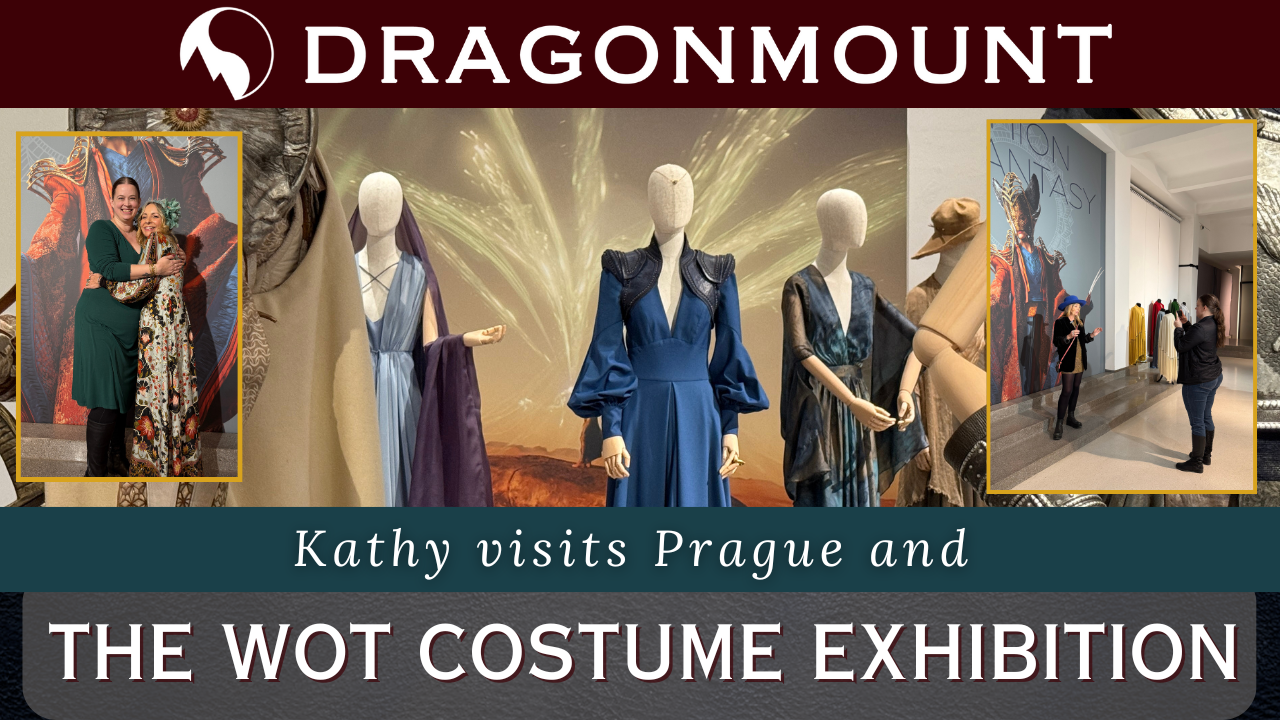
The Wheel of Time costume exhibition at Prague's Galerie Manes showcases over 80 breathtaking costumes, offering an unprecedented look at the intricate craftsmanship behind the show.
Read More...

Let’s start with the essentials. Looking to share the magic of The Wheel of Time with someone new? Start them on their journey with a copy of The Eye of the World—check your local bookstore. Tickets for community events like JordanCon, WoTCon, and MalkieriCon also make wonderful gifts. Don’t forget about supporting your special someone’s favorite creators! A Patreon membership is a thoughtful way to give them access to exclusive content and help sustain the creators who keep the fandom thriving. Dragonmount has some great merch for you too! Our store is bursting with goodies to show off your WoT pride. Speaking of pride- are you bonded and proud? Show off your bonded status with a t-shirt featuring your favorite color & pronoun option! $28 each. Looking for jewelry? These officially licensed items from Badali Jewelry should do the trick. They're currently on sale in our shop! Perfect time to grab your Aes Sedai ring- it's on sale for $79. The Ajah bracelet, which is typically $259 is on sale for $199. You can score Moiraine's Kesiera earrings for $34! We've got Dragonmount swag too! This large tote bag is perfect to carry around the project your working on with your Knitting Circle, or some of those new books you just added to your TBR pile. Pick up the We Are All the Heroes Notebook to jot down your thoughts and have a daily reminder that you are awesome!! Many of the content creators within our community have merch available as well! Visit your fav creator's site for their links. We've highlighted some of this year's favs for you here: Malkier Talks has released a new Snacc Warders of Time Calendar for 2025! We know next year's calendar will be as great at this year's was! The webstore also has swag for both Malkier Talks and Three Fold Talk.. and even some con merch! If you missed out on the Soundscapes Kickstarter, it's available on the Soundscapes website here. Perfect accompaniment for your re-read! Looking for more T-Shirts? tWoTcast has you covered. They've got tWoTcast designs, and they even have a tWoT Quest design. We are LOVING the Wotionary designs, though! If you (or the person you're shopping for) are Wotionary fans, you need to check these out. If you're looking for more festive merch, head over to KritterXD's shop. She's got some great WoT inspired Ugly Christmas Sweater designs, and since it's Redbubble- you can get them on all sorts of products! This Winternight Wonderland sweater is one of our favs. A Winespring Inn Gingerbread house- are you kidding me? If you're not aware of NewCreationsbyJen, you need to get yourself over there right now because it's basically a treasure trove of fandom merch. While you're shopping for your fam, get yourself the next Frosty Mug for your collection. Or do you collect shot glasses? Pick up Black Tower Podcasts' Taste the Taint shot glass. Maybe your sister could use some fancy new coasters for when she sips tea with the Tinkers. Does your brother have a baby? Get it some baby swag! Surely you've seen editions of the Weekly Wheel News floating around. Those ads are not just for show! There are all kinds of fun designs in here for t-shirts, stickers and more. You can even get Rob's gorgeous WoT map on an insulated bottle so you can gaze at it all day. There you have it! Go shopping, hit those sales, drops some hints to your loved ones, and definitely pick up something for yourself.


I liked the first novella in this series, The Fireborne Blade, and hoped to see more adventures with our two heroines. I did not suspect I would get my wish quite so soon! Saralene is now the High Mage, but the former holder of the title (recently deceased) has other plans for her. With her trusted companion, the brave knight Sir Maddileh, she must travel to the domain of the eponymous princes and find some way to prevent her imminent demise. Along the journey, the two will also face a perhaps greater challenge—their feelings for each other. Instead of the faux academic papers about dragons we had last time, this book breaks up the narrative with some short folk tales from the perspectives of both the humans and the dragons. The same events are seen quite differently, and the fun juxtaposition of the two feeds neatly into the story. Despite the high stakes, this book feels slightly lighter in tone to the first one, particularly with the running commentary of their new feline companion. Which is not a complaint by any means! If this is all we get with these characters, the book provides a satisfying conclusion to the tale, but I certainly wouldn’t complain if we got more of these bite-sized tales every now and again, much like a fantasy equivalent of the Murderbot novellas by Martha Wells. Recommended, alongside the first one. Thanks to Tor Publishing for the early review copy.
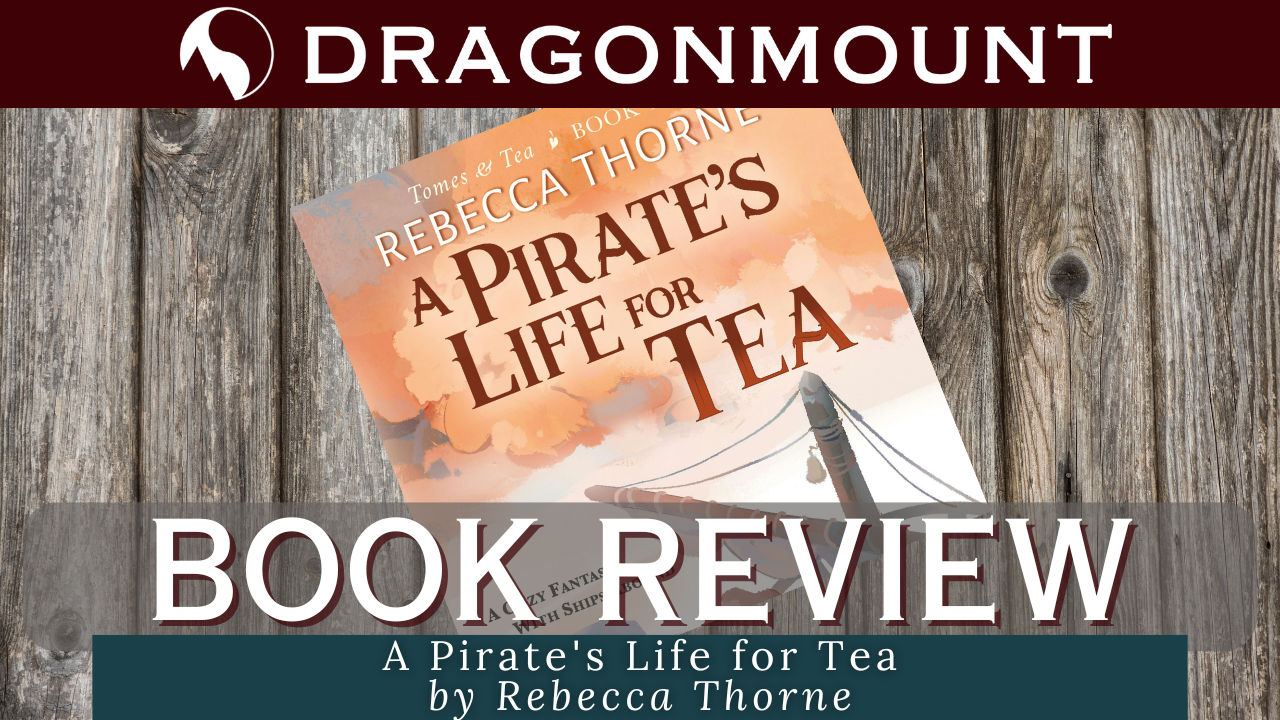
While the first book by Rebecca Thorne shared a certain amount of DNA with Travis Baldree’s cozy fantasy Legends & Lattes, this one takes Reyna and Kianthe’s story deeper into uncharted waters. As we discovered last time, Reyna is a former guard to a murderous queen, and Kianthe is the most powerful mage around, but they have both made a quiet life together in the village of Tawney, running a tea shop. There is the small matter of some missing dragon eggs they need to locate before said dragons decide to turn the whole place to ash, plus the continuing threat of Queen Tilaine, but other than that life is good, if perhaps a little too quiet. A year on, and the search for the eggs has taken our couple far west to Shepara, the home of the Nacean river. They have come to see the lord of the area, Diarn Arlon, who says he will happily help them in their quest, with one small condition—first they have to deal with an annoying pirate problem for him. That problem mainly takes the form of Serina, a Robin Hood-esque pirate who is stealing grain from Diarn Arlon to feed the poor along the length of the river. She is being pursued by Bobbie, who (in a clear case of nominative determinism) is the constable charged with bringing her to justice. Did I mention the two of them used to be friends, and perhaps, something more? And who is the Dastardly Pirate Dreggs? The generally light-hearted tone of the first story continues here. Bobbie crochets small animals when stressed, and is clearly under a lot of pressure by the number of these that litter the place. Reyna is helping to raise a chaotic baby griffin, and Kianthe’s puns remain truly under-appreciated. All in all, it’s an enjoyable romp and I was glad to spend more time with the existing characters, and meet the new ones. I look forward to reading the next book soon. Also, a tip of the hat to any fantasy book that makes such a blatant Mass Effect reference that I laughed out loud. Both books are highly recommended, thanks to Tor for the review copy.
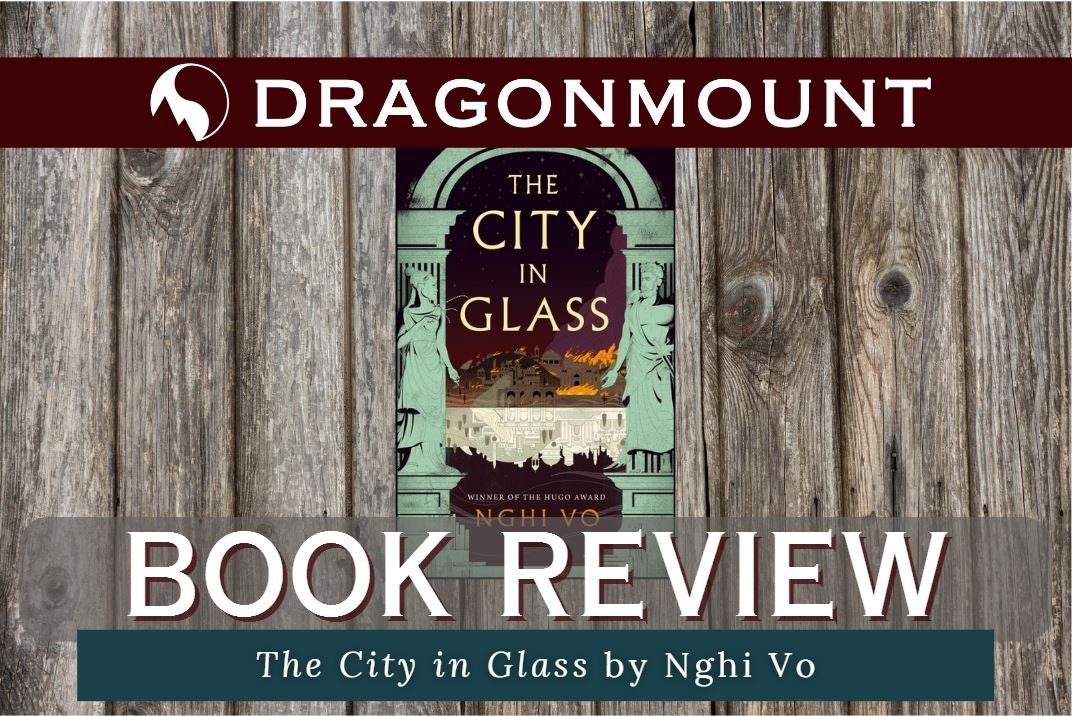

The City in Glass begins with three vengeful angels razing the city of Azril to the ground in fire and fury. Our protagonist—a demon named Vitrine who has spent generations of human lives creating the city by influencing and inspiring its people—dies along with the citizens of Azril. But demons are not welcome in the afterlife, and Vitrine returns to pick up the pieces of herself and her shattered city. This dreamlike book follows Vitrine as she starts over, rebuilding her Azril piece by piece and person by person. The narrative jumps back and forth between the original Azril and the new Azril, and we get to see Vitrine realize that, although she can use the infinite time afforded to an immortal to grow a city from the ruins of the old, it will never be the original city. Some things are lost forever. Grief and resilience are major themes in this book. Of course, the perspective of an immortal demon guiding a city into existence over a millennium may not be relatable to most of us. But the emotion of stark loss is, and Vo’s writing brings this mercilessly home. Vitrine, reeling, takes stock of her ruined works and wonders how the world can keep going on as if nothing has changed: "The sky is still blue," Vitrine thought, looking up. "I am not sure that the sky should still be allowed to be blue." The prose is stunning throughout this book: beautiful and raw and honest. Many of us have experienced grief in the form of the loss of a loved one, through death or separation. Although Vitrine’s loss is of a city and its history and people, it is also the loss of the time spent developing and cherishing that city. The realization that all she has left of it are memories, and that there is no future to dream of with those people, is the same crushing realization that brings the raw grief in all of us. Despite the impression that you may have at this point, this is not a book that will make you sad! I loved reading this book, and Vo’s biblical “and it was so” way of describing this fantasy world of demons and angels. As Vitrine sets about developing a new city, I was reminded of the mechanics of a civilization-building strategy game. She influences the course of history by encouraging this person to study astronomy, and that person to study commerce. She selects those people who show initiative and guides them into positions of power. She teaches her people to dance, and to read, and to have ambitions and goals. With a few exceptions though, Vitrine is not attached to the people. She is immortal and they are brief, and her project and passion is the city itself. I could not put this book down and I highly recommend it.


The Citadel College in Charleston, South Carolina—yes, the very place that helped shape the legendary Robert Jordan (aka James Oliver Rigney Jr.)—is hosting a virtual auction for the Ages. Imagine this: rare, one-of-a-kind editions of The Wheel of Time books straight from Robert Jordan's personal collection are up for grabs. This means fans can bid on items like advanced reader copies, uncorrected, rare, impossible-to-find leather bound editions, and much much more! It’s like we’ve stumbled upon a treasure trove within a stasis box! If you’ve ever dreamed of owning a piece of the series that shaped so many lives, and even some other authors’ first forays into writing (“some other authors” like Brandon Sanderson or Michael Livingston), this is the moment to channel your inner ta’veren luck, listen to those dice, and dive into the bidding war of a lifetime! And, even better, it’s all for a good cause. Much of the proceeds from the sale of the items will go to supporting underprivileged youth in securing tuition assistance to attend the Citadel itself! The Legacy of Robert Jordan at The Citadel For those unfamiliar with the connection between The Citadel and The Wheel of Time, it’s important to know that Jordan was an alumnus of the school. His time there helped shape the discipline, precision, and depth of thought that is so evident throughout his sprawling fantasy epic. For years, The Citadel has been an unofficial guardian of his legacy, and the college’s archives are home to an extensive collection of his manuscripts, letters, personal items, and notes. Now, The Citadel is giving us, the fans, a chance to own a part of that legacy. A Collector’s Dream: The Auction Details This virtual auction feels like something pulled from the Age of Legends. The collection includes first editions, signed copies, and even some personal, annotated volumes that Jordan himself held in his hands. For any Wheel of Time aficionado, this is more than just an auction—it’s a pilgrimage. For example, fans can bid on a copy of The Shadow Rising, the book in which The Wheel of Time began to broaden in scope, with the introduction of the Aiel and deeper dives into the history of the Forsaken. To hold Jordan’s own copy of this book is to be in touch with the Creator’s process. It’s not just a physical object—it’s a thread from the Pattern itself. More Than Just Books In addition to signed leatherbounds, auction-goers can bid on advance reader copies, uncorrected proofs, New Spring graphic novels, exclusive editions, paperbacks, foreign language editions, and even the personal desk and bookcase from Jordan’s home. These are the kind of treasures that we, as fans of the series, would be honored to display in our homes—items that speak to the depth and care that went into creating one of the greatest fantasy worlds ever written. Picture this: you bid on and win a signed edition of A Crown of Swords. It arrives on your doorstep in all its hardcover glory. You carefully turn the pages, knowing that the man who brought Rand al’Thor, Egwene al’Vere, and Mat Cauthon to life touched these very pages. There’s magic in that. How to Participate The auction will be hosted online and in person by Embassy Auction International in cooperation with the Citadel College on Thursday, September 26. Online bidding starts at 10am ET, but the items are already listed here, along with information about the location of the in-person auction. If you have a way to make it to the auction in person, you can peruse the items during the two days prior to the auction and maybe connect with some other Wheel of Time fans there (#AuctionCon, anyone?). But since most of us can’t make it to Kinzers, Pennsylvania, the virtual option will make the auction accessible to Wheel of Time fans across the globe. As you step through your sword forms and the bidding wars unfold, fans from all over the world will be united in their shared love for this series. It’s as if the White Tower, the Seanchan, and the Dragon’s armies are coming together not for battle, but for a celebration of Robert Jordan’s legacy. So, prepare your wallets, fellow Wheel of Time lovers. The Citadel is offering us a chance to be stewards of these rare and precious artifacts. May the Light shine upon your bids, and may the Creator guide the auctioneers’ hammers as they bring these books to new homes. And remember, like the weaves of the Pattern, this opportunity may never come again.
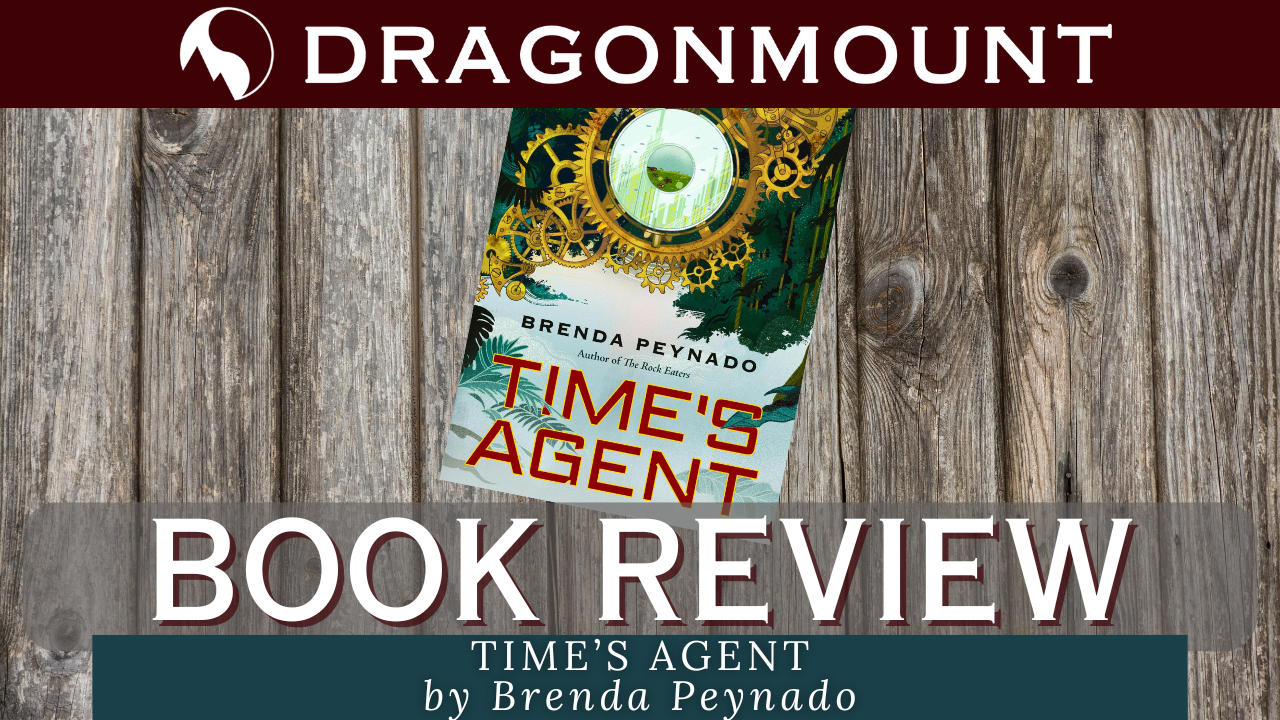
Raquel Petra has everything she could ever want - her wife Marlena, their daughter Atalanta, and a job working alongside Marlena as researchers for the Institute. Specifically, the Global Institute for the Scientific and Humanistic Study of Pocket Worlds, which investigates little bubbles of parallel reality, and the elusive points that connect them to our own. Then, with one tiny mistake, Raquel loses everything in an instant. Time runs fast in some of these worlds, slow in others. This leads to a wide variety of imaginative uses for time dilation, which is one of my favourite things in the story. Grow crops very quickly in a fast world, then store them in a slow world so they don’t go off. Calculating how old somebody is requires keeping track of all the worlds they’ve been in. Because the points where you enter a world can be attached to a movable physical object, which can itself be brought inside another world, you end up with worlds within worlds, and all the complexities that might imply. It’s a great science fiction concept to build the tale around, but all the other aspects here shine just as much. This is a story anchored in the Dominican Republic. Raquel works as an archeologist, exploring the pocket worlds for evidence of the indigenous Taíno people of the Caribbean, something that becomes more relevant as things progress. On a broader view, it is very much about colonialism, capitalism, environmental disaster, and war. But, primarily it’s about one person’s sadness, grief, and complete self-destructive refusal to let go of what she lost. Those are the parts that really stuck with me after I had finished reading. Ultimately, it’s also about hope, something I am personally very glad for, and you will be too. This story hurts in all the right ways. Highly recommended. Thanks to Tor for the early review copy.

When I think about what makes our Wheel of Time (WoT) community "statistically the best," people like Jordan Rannells come to mind. Having been a part of the WoT community for over 20 years, I've witnessed first-hand the incredible creations born from the joy and love we all share for the world that James Oliver Rigney, better known as Robert Jordan, has given us. Our community's creativity knows no bounds. From fun ribbons, games, ajah-colored bracelets, stickers, tiny knitted horns hidden around conventions, to fan websites that have been running for nearly three decades, we thrive on our love for WoT, despite the scarcity of official merchandise (looking at you, Sony & Amazon). The lack of merchandise has only driven us to be more inventive! This brings us to the latest exciting new beginning: the 'Soundscapes' created by Jordan Rannells. After his successful project for Lord of the Rings, he initially thought he wouldn't have the time or energy for another. Thankfully, he was wrong. We are now on the brink of experiencing this incredible new addition to The Wheel of Time literary universe. Don’t just take my word for it- Michael Kramer & Kate Reading, our beloved audiobook narrators, are all about it! Jordan Rannell's passion project features professional voice acting and original scores, immersing listeners in the WoT story in an unprecedented way. I've had the privilege of listening to several samples at various stages of completion, along with those available online, and they are simply astounding. Imagine the rhythmic sound of hammers ringing against steel, lightning sizzling into Shadowspawn, or tanning on the beaches of Tanchico alongside the crashes waves- all while our favorite narrators breathe life into the pages, bringing the weaves of The Wheel of Time to life in a captivating new way. Now, to the point! This Kickstarter project is not yet fully funded and needs our support. Even a donation of $1 can make a significant impact if enough of us contribute, and there are plenty of us. Let’s show our love for passionate creators like Jordan and help fund this amazing project! The most exciting aspect of these Kickstarter rewards is that not only can you enjoy immersive soundscapes to accompany your audiobooks, but Jordan is also providing unique opportunities to actively participate in bringing this world to life. YOU can help decide what saidin sounds like or even lend your voice to one of the countless creatures and characters that populate these lands. This level of involvement offers a rare chance to influence and be a part of the rich, dynamic universe you love. Anyone who backs the project or increases their pledge between the posting of this article and August 11th, 2024, will have a chance to win numerous fabulous prizes submitted by Dragonmount, along with a Grand Prize from Jordan Rannells himself! Prizes will be announced Monday, August 5th during Dragonmount’s weekly Live #reWoTch stream. The drawing will take place the following Monday, August 12th, also during #reWoTch. Let’s gooo, #TwitterofTime, and best of luck to all who contribute! The Wheel weaves as the Wheel wills!
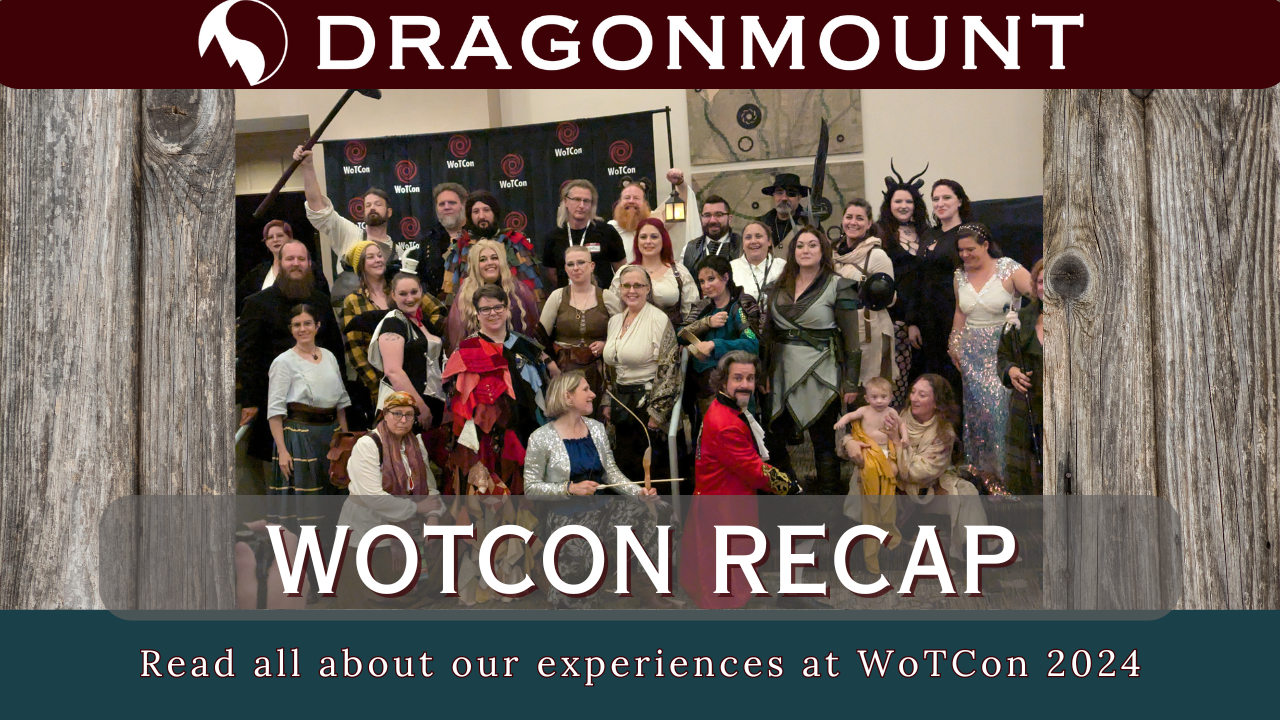
WoTCon 2024 kicked off with a bang headed by the Master of Ceremonies, Matt Hatch from The Dusty Wheel, and WoTCon’s Operations Director, Nae’blis. Opening Ceremonies featured the esteemed Guy Roberts as this year’s Guest of Honor. With a stellar lineup, including Michael Livingston, Maria Simons, and the talented audiobook duo Michael Kramer and Kate Redding, the stage was set for a remarkable gathering. Throughout the event, the blend of serious discussion, creative exploration, and WoT knowledge created an atmosphere that was inviting and fun. The convention was structured into panel sessions, which were categorized into tracks like Main, TV Show, Games & Fun, Book, and Creative. The track names are a bit clunky, but I appreciated the clarity. Each session was rated for spoilers, ensuring all participants could enjoy without fear of unexpected reveals, a thoughtful touch that highlighted the organizers' commitment to inclusivity for all fans. Panels at WoTCon were a core highlight, offering a variety of topics ranging from in-depth character analyses to speculative discussions about the series’ future. The panels offered a chance to delve deeper into the aspects of The Wheel of Time and encouraged active participation from the audience, making discussions a dynamic exchange. The printed program clearly described each panel, ensuring that attendees could easily follow their interests and engage fully with the content most relevant to them. One of the most anticipated sessions was the Season 3 Speculation & Adaptation panel, where fans shared their hopes and concerns for the upcoming television adaptation. Another fan-favorite was the WoT Ones panel- a Wheel of Timey twist on the viral Hot Ones spicy wing-eating game show. Speaking of favorites and spice- the relationSHIP panel explored potential romantic pairings within the series, allowing attendees to flex their looney theories in a spicy new way. The WoT IRL- Heroes of the Horn panelists speculated which real-life figures might be tied to the Wheel as Heroes, encouraging interesting discussions. The WoT Fantasy Draft turned character analysis into an engaging sport, where participants chose characters as if picking a fantasy sports team, leading to lively debates and strategic thinking. Guests imparted their wisdom with Michael Livingston providing his expert analysis of the Last Battle and content creators providing valuable advice in the Content Creation & How to Do It panel. These were just some highlights, there were plenty more- you can find the full schedule on their website. Panels aren’t the only thing on the program for WoTCon. The con’s nightlife was definitely kicking! Friday night's featured a special dinner for content creators, guests and those who purchased the all-inclusive event ticket. The giant sing-along and all the games in the atrium set the tone for a weekend of celebration and connection. Throughout the weekend, cosplayers showcased their incredible talents, culminating in a vibrant cosplay parade on Saturday. I saw Bear Elayne and also watched Shael give birth right on stage! Visit our WoTCon 2024 Photo Gallery to see more costumes in action. The banquet (this time for everyone) on Saturday evening was a highlight, with Matt and Nae'blis providing entertainment by reading anonymous notes from attendees that ranged from heartfelt thanks to delightfully cringy WoT-themed dad jokes and even a donation challenge. We were also treated to Kate Redding & Michael Kramer's reading of "The Grave is No Bar to My Call" from The Great Hunt. It was easy to see the experience was deeply appreciated by all who attended. Post-dinner, the room transformed into a lively dance party (with a bar!) that lasted all night. We danced so much, we would have made the Tinkers proud. For those less inclined to dance, the atrium hosted a Trivia game and plenty of people to chat with, ensuring there was something for everyone. It wouldn’t be a Wheel of Time convention without badge ribbons and shenanigans. There were badge ribbons (and stickers!) aplenty. Maria was giving out star stickers, which is so appropriate since she is an absolute star. Creator Salts designed some adorable stickers- a sister of each Ajah, Rand, Matt, Perrin, Valda, some other guys and the cutest Mydraal you've ever seen. Callie handed out amazing Ajah-colored bracelets that everyone rocked all weekend. Koala Sedai presented a giant-sized Uno card from her Cards of Time game to Guy Roberts, but not before she got all the backers of her Kickstarter to sign it! The Black Tower held a pinning ceremony where they raised members to Dedicated and Asha’man, including Penny "The Cake Lady" Laspina & Guy Roberts! Roofmistress Leigh-a presided over a ceremony where two Internet besties meeting in person for the first time became first sisters! The con closed with an improv session that perfectly displayed the spirit of community and fun among our fandom. This was a gathering of friends, both old and new, united by their love for The Wheel of Time. As the convention wrapped up, the sense of community lingered. Plans were already being made for next year, with many—including myself—planning to arrive a day early to partake in the pre-con fun. WoTCon was a vibrant celebration of The Wheel of Time, its fans, and the bonds that tie us together. I left Columbus with a heart full of memories and a renewed excitement for the series we all hold dear. WoTCon 2024 was an absolute blast, and I can’t wait to see what next year holds! I’m going to leave you with my favorite photo of the weekend. Sparkles, bubbles, coffee, Maria, Michael, rubber ducks, cocktails, cameras, and smiles all around. It sums us right up!
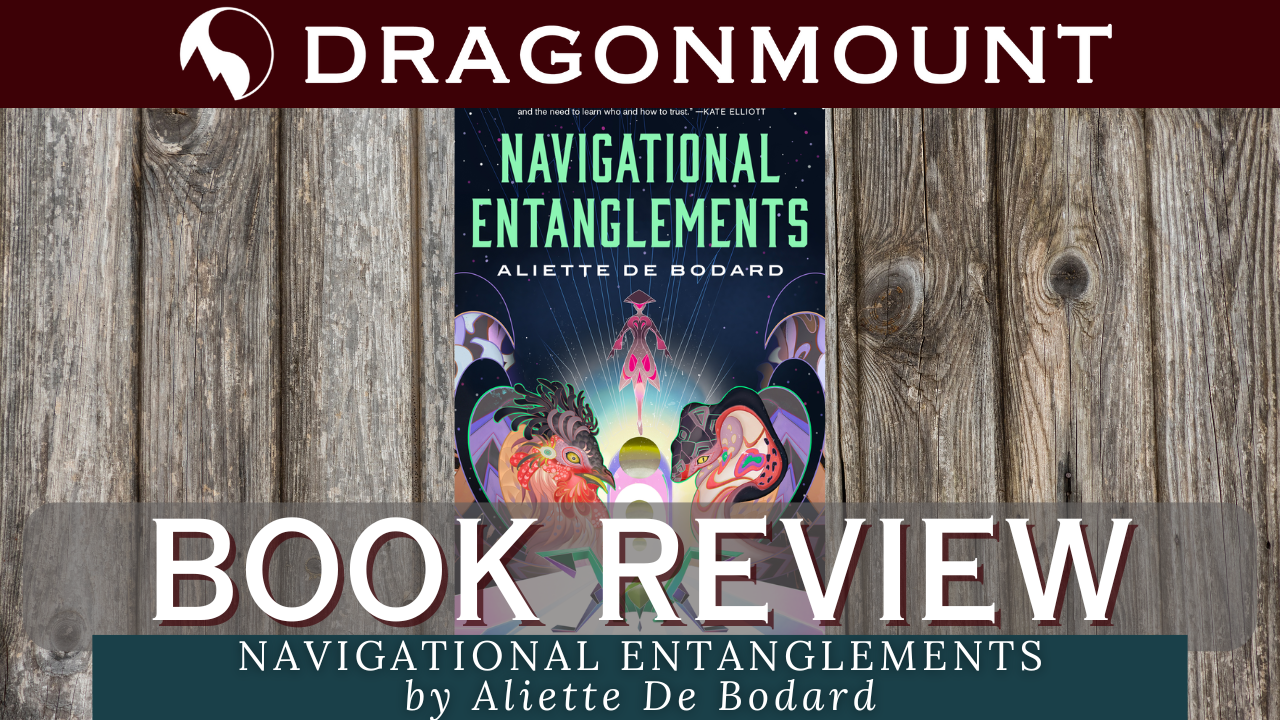
This novella has quite a different setting from Aliette de Bodard’s recent Xuya books, but it’s an equally fascinating place. Việt Nhi is a lowly member of the Rooster clan, one of the four opposed navigator clans who help guide ships through the Hollows; another space entirely that is used as a shortcut to achieve faster-than-light travel. As with many shortcuts, there is a slight catch. The Hollows are also home to a form of life known as the Tanglers; large unknowable creatures with deadly intangible tendrils that love to feed on the travellers who cross through their realm. The navigators are not defenceless however—they can project their life energy into a form known as their Shadow; a force that can tear open holes in the universe and protect their ships from harm. Sometimes though, Nhi just uses it to give herself a nice hug when she is feeling stressed out by life. And Nhi is certainly stressed. Not only has one of these eldritch horrors escaped from the Hollows intent on devouring everything in its path, not only is she being sent to find and catch it, but she will have to work with delegates of the other three clans to do so, accompanied by an aloof imperial envoy intent on keeping everybody in line. Nhi does not do well with people. They do not always make sense to her, and she finds social interactions particularly wearing. Plus, all the clans barely tolerate each other at the best of times, so this will be quite the challenge of teamwork. To complicate matters even further, she finds herself inexplicably drawn to another member of the team… With a queer and neurodivergent main protagonist, and a band of lovably broken outcasts, this is a fun tale inspired by xianxia-style martial arts, but rooted in science fiction with an undercurrent of romance. It does a lot of world building despite the short length, and I hope we will get to see these characters again, or at least have more stories set in the same universe. Definitely worth your time. Thanks to Tor Publishing for the early review copy.
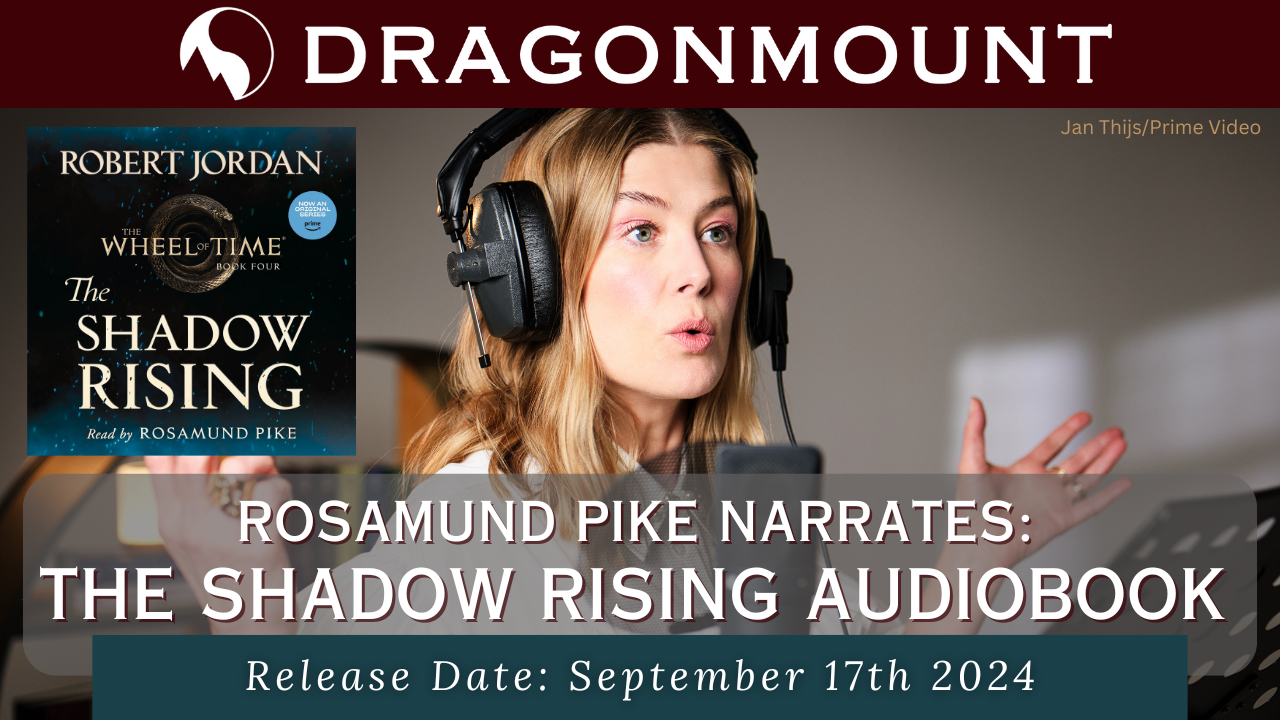

The Shadow Rising audiobook narrated by Rosamund Pike will be released on September 17th, 2024. The audiobook is available to preorder now from wherever you buy your audiobooks! This is the fourth book in The Wheel of Time book series written by late author Robert Jordan. Rosamund Pike, who plays Moiraine Damodred in Prime Video’s The Wheel of Time, has narrated new editions of The Wheel of Time audiobooks. In 2023 she won an Audie for best female narrator for her version of The Eye of the World. The Dragon Reborn won an Audie award for fantasy in 2024. The audiobooks are published by Macmillian Audio. Rosamund Pike says - The Wheel of Time series narrated by Kate Reading and Michael Kramer are also still available for purchase from Macmillan Audio. The Shadow Rising is available for preorder now!
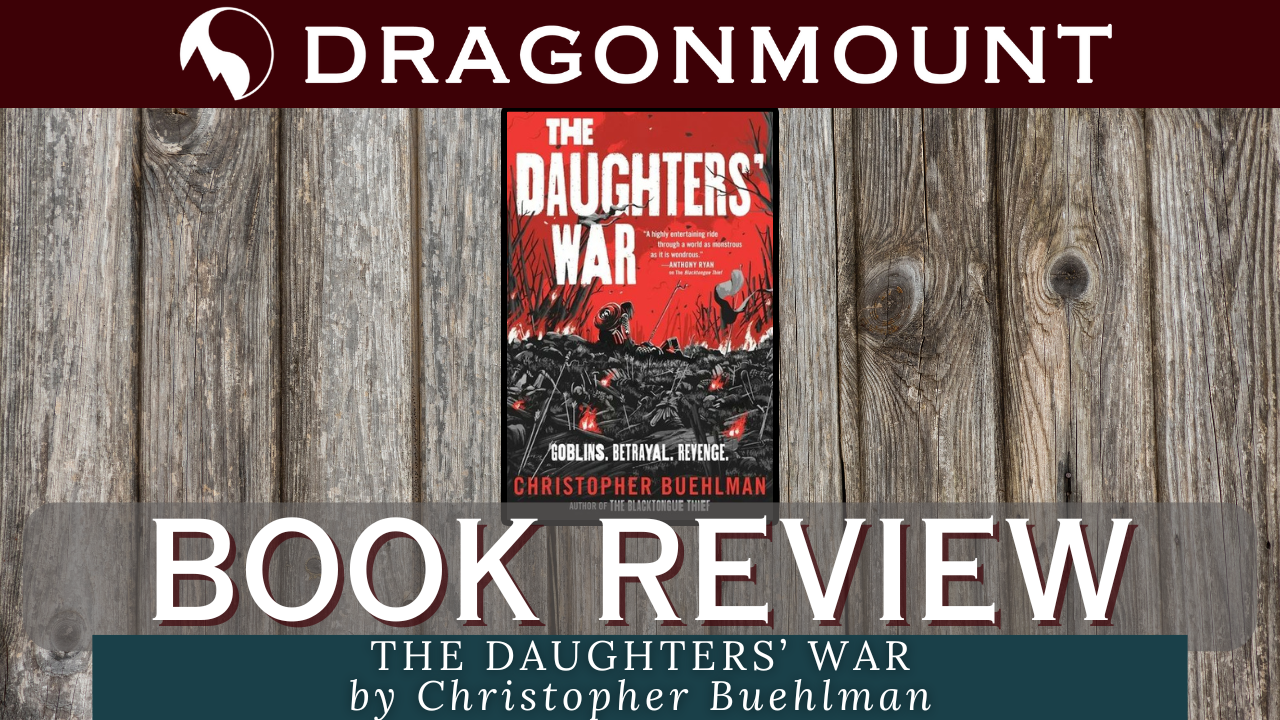
I was incredibly excited to read The Daughters’ War by Christopher Buehlman, whose work I first discovered last year when browsing for audiobooks by top rated performances. Buehlman had read his own book, The Blacktongue Thief, and I was intrigued. In theory authors should be the perfect people to narrate their own books—they will get all of the pronunciation correct, and any intended inflections or emphases will be realized—but this is seldom actually the case. Voice acting is a talent and a skill that takes training to develop, just as writing is, and most folks pursue one path or the other (well, most folks pursue neither but we’ll forget about them for now). Buehlman defies this by turning in an excellent and accented performance of The Blacktongue Thief, deftly introducing readers to the characters and lore of his grim fantasy world. The world of “Blacktongue,” where the duology (and I hope there are more books to come) is set, was not always grim. The Blacktongue Thief takes place several years after the goblin wars, a series of invasions by goblins that required increasingly desperate measures and alliances to be repelled by the kynd (the humanlike [humankynd?] races). The first invasion, known as the Knights’ War, was easily won by knights on horseback who outmatched the shorter goblins. The goblins responded by introducing a plague that devastated the horse population nearly to extinction, and the second invasion, called the Threshers’ War, required the conscription of farmers in order to hold out against the goblins. The humans won but paid a high price in blood and sons, and when the goblins came again, they had to call upon their daughters to march to war. This “Daughters’ War” is where this second book takes us, from the perspective of Galva dom Braga. Galva, who was a grizzled veteran who worships the god of death in The Blacktongue Thief, is now an untried soldier marching to war as part of an experimental unit of women soldiers matched with war corvids. The corvids are magically bred, oversized, intelligent ravens that are trained to kill goblins. Readers of The Blacktongue Thief will know that the war corvids did indeed turn the tide, driving the goblins to an uneasy truce and leaving nearly the entirety of Manreach with a severe case of PTSD. The Daughters’ War takes place during the war of that name, but the book is really about one daughter’s war: Galva dom Braga. Her three brothers are also marching to war, each in different capacities, and the story follows the dynamics of the dom Braga family in tandem with the battles against the goblins. The eldest brother and heir is a drunk who has been given a mostly symbolic rank and spends his war drinking and carousing with other ignoble nobles. The next brother has earned his high rank and sits on the senior war council. The youngest brother is a sort of assistant apprentice to the powerful and slightly mad wizard who created the corvids. Then there is Galva, the third eldest, who has trained at the elite sword academy and is paired with two deadly war corvids but has not yet been tested in a real fight. Each dom Braga sibling will be tested in this war—against the enemy, against each other, and against themselves—and some will do better than others. Galva also experiences love and friendship, all against the backdrop of a terrible war that can suddenly and painfully introduce loss into any relationship. And the war is brutal. Readers of The Blacktongue Thief will recall the legacy that the goblin wars had on the lands and their people; readers of The Daughters’ War will experience that trauma directly. These goblins are not the lesser cousins of orcs that populate many fantasy worlds. These are terrifying monsters whose primary reason for invading is simply that they want to eat people. Being eaten by monsters is not an unusual threat in fantasy (who can forget the infamous trolloc cookpots), but there is something particularly terrifying about the matter-of-factness with which these goblins pursue it (Buehlman has also written several horror novels). People are farmed, dumbed with drugs, herded, butchered, and savored. The goblins are intelligent, but in a nonhuman way. They build siege engines and execute strategies, but they also swarm like zombies, piling over themselves to overwhelm adversaries. There is an inevitability to the goblin invasion that permeates these pages. That is why the farmers, and now the daughters, have been called to fight. I applaud Buehlman for creating this menacing adversary, and I applaud him further for making this book about the people who are fighting more than about the fight. There are fights aplenty, but the impact is felt more on Galva's character than on the battlelines. The book is, after all, a prequel, so a prepared reader will know more or less how the war itself goes. What is far more interesting is the path that Galva takes from a green soldier to the hardened, no-nonsense soldier that we meet in The Blacktongue Thief. We also see Galva meet the Infanta Mireya, whose usurped throne is a point of some consideration in The Blacktongue Thief, but whose relationship to Galva is the point of consideration in The Daughters’ War. Perhaps the thing that impressed me most about this book is the change in tone from The Blacktongue Thief. That book is told from the perspective of the titular thief, full of exaggerations and swagger, willing to do most anything to seize an advantage. This book, from the perspective of the upright soldier Galva—for whom lying is a cardinal offense and to whom death is preferable to dishonor—feels entirely different. Even the verbosity is dialed back, from a skilled linguist who clearly enjoys his way with words to the laconic soldier who will not waste breath nor ink on anything that does not need to be said. The Daughters’ War is a masterpiece in evoking the readers’ full range of emotion. This book made me stay up past my bedtime, made me cry, made me laugh (a little—there is little humor in war), and a certain character made me absolutely furious. I cannot recommend this book enough, and we can all hope that Christopher Buehlman continues to write in this world. The Daughters’ War is released on June 25; thank you to Tor for the advance review copy.
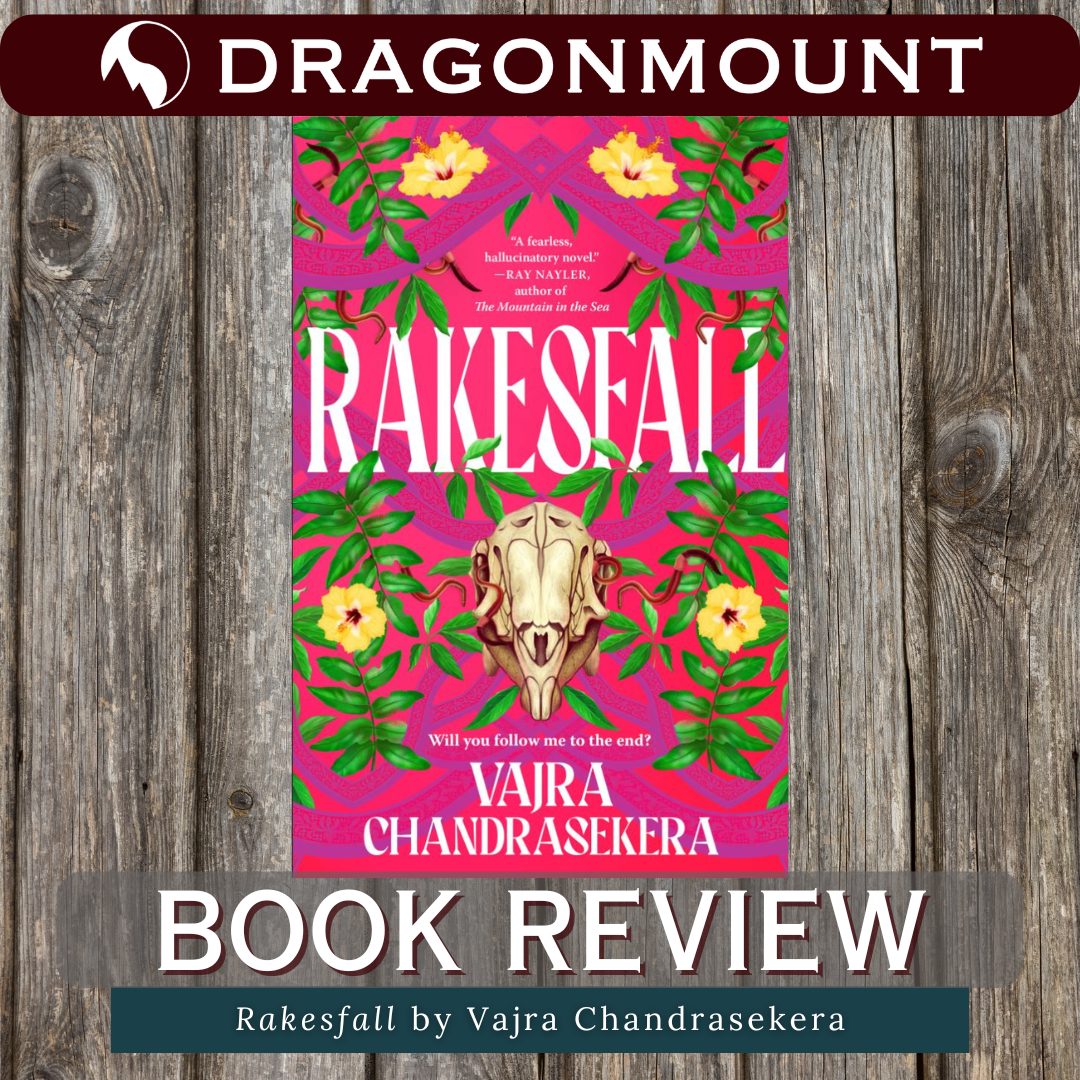

Rajiv Moté is Dragonmount’s book blogger with a lens on the craft of fiction writing. When he’s not directing software engineers, he writes fiction of his own, which can be found at his website. Is history a fact, or a story—and, if the latter, whose story? Rakesfall, by Vajra Chandrasekera, is a series of stories that intentionally collapse on their way to completion, question their own truth and intent, expound on the nature of reality and history, and then morph into something completely different. Rakesfall doesn't try to invest you in a particular character or plot; it’s not in the business of setting up expectations and then fulfilling them. It uses stories—or fragments of them—as a means of illustrating a philosophical and political thesis, delivered from the mouths of a rotating cast of characters. What is fiction anyway? Is it the same thing as a story? Is it that graph of exposition, rising action, climax, falling action, and denouement, where someone or something irrevocably changes? For me, Italo Calvino's If on a winter's night a traveler was the book that first showed me that fiction could be far weirder, taking readers on a journey and showing them the sights in different ways, sometimes addressing the readers directly, sometimes narrating the readers as though hijacking their minds. The title “Rakesfall” refers to a mythological world war between peoples known as the Yoke and the Rake. The Yoke conquered and colonized, but the Rake survived and persisted in hiding. They form an archetype for conflicts that echo through time, where the conqueror writes history, but the conquered still “haunt” the world the victor describes, a dissonance in the tale—and a ticking bomb. This is the heady premise of a thread that connects several otherwise disjointed stories across space, time, and characters. It’s Hindu monistic philosophy in a Marxist critical theoretic frame. Who has the power, how is it exercised, and what illusions of division does it generate? If this sounds elevated and hard to understand, that’s also my experience of reading Rakesfall. The book is full of mysterious meta-stories that don’t reach any evident conclusions, and character-delivered explanations of why it’s wrong to expect evident conclusions. “You mean that histories are true and stories are lies? No, both are true and both are lies, grandmother says. The difference is that stories have endings, and histories understand that nothing ever ends.” Rakesfall skips among unrelated characters (of fluid genders and species), settings, time periods, and genres, and insists that all these categories aren’t real. The Hindu maya, the illusion we perceive of distinctness and separateness, is an instrument of oppression that it is our eternal mission to dismantle. These aren’t different stories. They’re all one story, whether the illusion is experienced as supernatural or as a glitch in one’s post-human sensor arrays. It’s informative that six chapters of Rakesfall were published as five independent short stories across five magazines and nearly two decades. It has the feel of an author circling a set of concepts and, in a metatextual flourish, unifying them. Those who have read Chandrasekera’s wonderful debut novel, The Saint of Bright Doors, will recognize many of the same themes, laid out in a more straightforward way. (It’s saying something that Bright Doors reads as straightforward in comparison to Rakesfall.) In fact, the city of Luriat, with its invisible laws and powers, bright doors, and rewritten palimpsest history, are part of the much broader universe (multiverse?) of Rakesfall. This is a universe where time is “not a flowing river of cause and effect, but a glacial ocean, whole and complete, past and future laid out full, frozen and transparent.” Reincarnation, ghosts, zombies, and digital consciousness outside of time are phenomena that reveal the lie of the life/death duality. The “akashic record” is the true history of all that is, which is either supernaturally written in the firmament, or a universal blockchain, depending on the era. Identities—our senses of self—are porous and bleed not only up and down our ancestry, but across our connections and sense of purpose. Haunting—a recurring theme—is the shadow thrown by the suppressed past on the current version of history. In this setting, the characters in various eras struggle toward various goals, but their story is really about escaping illusory concerns and seeking wholeness and reconciliation with the past—often through shocking violence. Okay. That’s a lot of high-minded material. But is it a good read? This is a book that engages with the head far more than the heart. The ideas are sophisticated and complex. The language is poetic, sometimes playful, with wry twists in tone and rhythm: “Until then she will not rest, nor sleep, not leavetake, not take leave, not take or leave, nor give and take, nor so much as blink.” There’s humor and relatable truth: “Whenever Uncle rants, about history, about politics, about the injustices faced by his, that is to say their, great race, his comb-over rises up and unfurls like a flag.” There are jokes that are jarring in their context, but it feels intentional: “Grandmother Sits only ever gives explosives on birthdays.” For readers who read to admire the artist’s artistry and the intellectual game of metafictional self-reference, recursion, and infinite regress, this book is full of delights. For readers who seek the union of philosophical and political arguments that can reference the Hindu epic Ramayana, the Sri Lankan Civil War, and post-human cyberpunk detective stories, this is your book. But if you’re reading to immerse yourself in characters, their yearnings, and the escalating measures they’ll take to fulfill those yearnings—if you’re looking for a traditionally-defined story—Rakesfall will actively resist you. To be fair, every step of the way, it telegraphs what kind of book it isn’t. It isn’t a tale, it’s an argument about tales, history, and the nature of the universe. It can explain, in text, why it’s making the narrative choices it makes, but it doesn’t try to win you over to it. That’s on you. I was often frustrated as I latched onto a story thread, only to see it yanked away or interrupted by a screed just as I was getting invested. There was a certain pleasure in going back over my highlights and notes, and discovering all the intentional connections. But this was an intellectual pleasure, not the emotional one of reading a great yarn. Rakesfall is aware, and answers with a shrug. “But maybe it’s exploitative to attempt truth in fiction, maybe it is mere commodification only, maybe fabulism strips histories of whatever dignity realism might have to offer—or maybe it’s the other way around, maybe it’s mimesis that takes away history’s dreams and fantasies, makes it small and lonely and vulnerable in a haunted world.” It is up to you, reader, to determine if that model of fiction satisfies. Much gratitude to Tor Books for the advance reading copy. Rakesfall will be available June 18, 2024.
-
Stay Connected








-
-
-
Support Dragonmount Get exclusive content on our Patreon. Don't miss out.
-
-
Upcoming Events